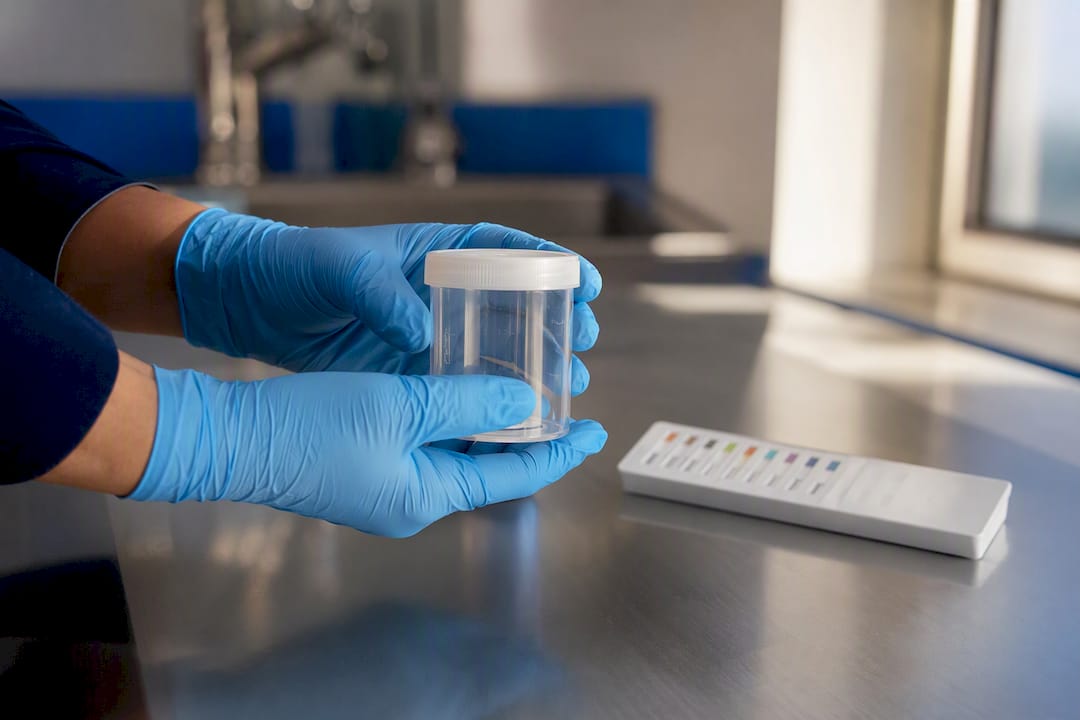
A 12 panel drug test is a urine screening that checks for 12 specific drug classes in a single sample, combining the federal SAMHSA-5 baseline (amphetamines, cocaine, marijuana/THC, opiates, and PCP) with seven additional substances employers commonly add. The result you get back first is presumptive, meaning it flags likely presence but hasn’t been confirmed by a lab yet. Any positive screen needs confirmatory testing before it can support a hiring or termination decision.
The typical 12 panel drug screen adds these seven analytes to the SAMHSA-5 baseline:
- Benzodiazepines (Xanax, Valium, Ativan)
- Barbiturates (phenobarbital, butalbital)
- Methadone
- Oxycodone (OxyContin, Percocet)
- Buprenorphine (Suboxone)
- MDMA/ecstasy
- Tricyclic antidepressants (TCAs)
There’s no federal standard that locks in these exact seven. Labs, manufacturers, and individual employers customize the panel beyond the SAMHSA-5 core, so a “12 panel” from one provider isn’t guaranteed to match a “12 panel” from another. Point-of-care cups and dip cards give you a fast presumptive read. They are not a final legal determination on their own.
Table of Contents
- What Are the 12 Panels in a Drug Test?
- Which Sample Type Should You Use: Urine, Hair, or Saliva?
- How Do You Interpret a Positive or Negative Result?
- What’s the Difference Between DOT and Non-DOT Drug Testing?
- Setting Up a 12 Panel Testing Program: A Step-by-Step Guide
- How Total Tox Delivers Reliable 12 Panel Testing for Employers
- What Employers Should Take Away From This Guide
- Frequently Asked Questions About 12 Panel Drug Testing
- Sources
What Are the 12 Panels in a Drug Test?
The exact analyte mix shifts by manufacturer, but most 12 panel configurations follow a recognizable pattern: five federally mandated classes plus seven that address opioid abuse, sedative misuse, and party drugs. Knowing the specific cutoff for each matters more than knowing the drug name, because cutoffs determine how sensitive the test actually is.
Immunoassay screening cutoffs are measured in nanograms per milliliter (ng/mL), and they vary by manufacturer. One widely referenced example set from a testing supply manufacturer lists THC at 50 ng/mL, amphetamines at 1,000 ng/mL, opiates at 300 ng/mL, benzodiazepines at 300 ng/mL, and MDMA at 500 ng/mL, but you should treat these as illustrative rather than universal. A comparison of smaller drug test panels shows how adding analyte classes changes both cost and the odds of catching prescription-drug misuse that a narrower panel would miss.
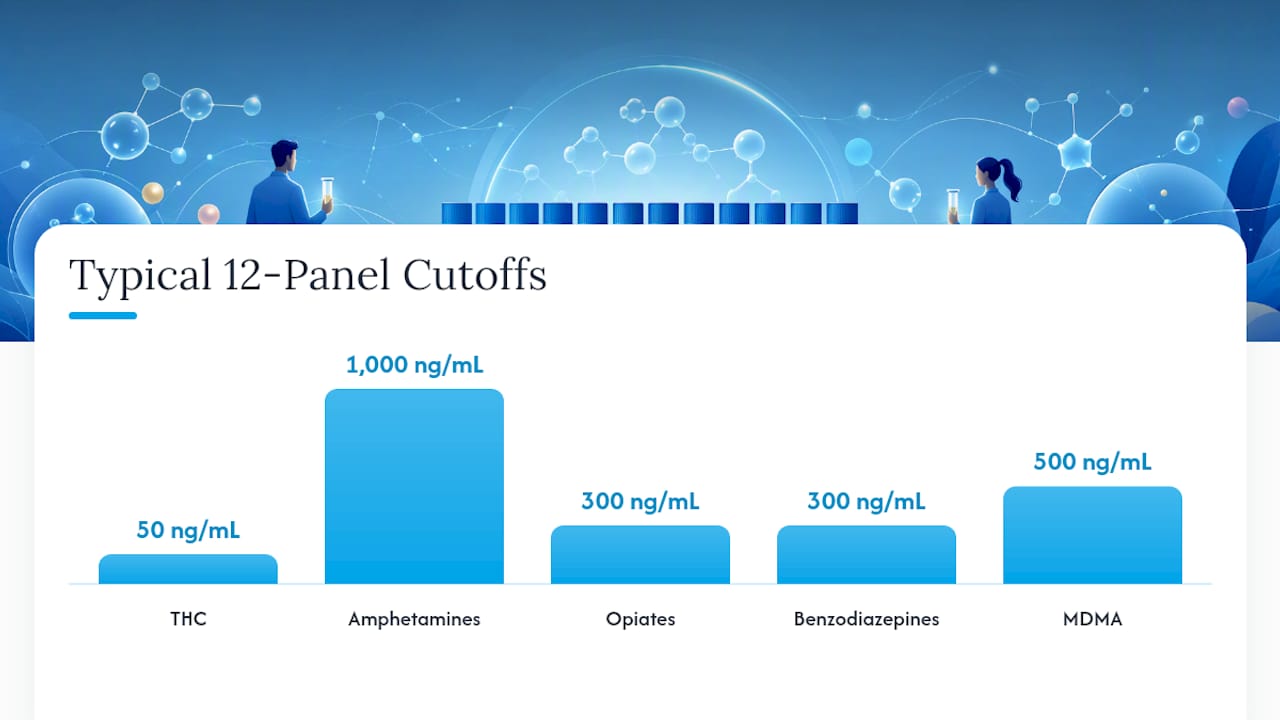
These ranges reflect a mix of federal guidance and manufacturer-published cutoffs, and they move depending on hydration, metabolism, dose, and frequency of use. THC detection is the biggest outlier on this list. A single-use screen might clear in a few days, but a chronic daily user can test positive for a month or longer, and that spread alone explains why a single detection-window number is almost meaningless without context on use pattern. A PMC review of urine drug testing documents this range directly, noting that urine detection windows range from about a few days for MDMA to extended periods for THC depending on user habits.
Pro Tip: Never assume two vendors’ “12 panel” tests are identical. Ask for the specific analyte list and cutoff table before you sign a testing contract, not after you get a result you don’t understand.
Why panel configuration varies so much
A distributor’s version of a 12 panel might swap tricyclic antidepressants for fentanyl. A hospital lab’s version might include ethyl glucuronide (ETG) to catch alcohol metabolites instead of MDMA. This isn’t sloppiness. It reflects real differences in what industries need to screen for. A construction company worried about opioid misuse on scaffolding crews has different priorities than a healthcare employer worried about diverted benzodiazepines.
Some of the most common “optional” additions folded into a 12 panel setup include:
- Fentanyl, increasingly added given the drug’s prevalence in counterfeit pills and its narrow, easy-to-miss detection window.
- ETG (ethyl glucuronide), used to detect recent alcohol consumption, relevant for safety-sensitive roles with zero-tolerance alcohol policies.
- Buprenorphine, sometimes swapped in or added separately since standard opiate immunoassays often miss it.
The National Institute on Drug Abuse notes that prevalence and risk profiles shift by region and industry, which is exactly why a one-size panel rarely fits every workforce. If your industry has documented fentanyl exposure risk, or your workforce skews toward long-haul driving with fatigue-management concerns, that’s worth raising with whoever configures your panel before testing starts, not after a screen comes back negative for something you assumed was covered.
Which Sample Type Should You Use: Urine, Hair, or Saliva?
Urine remains the standard for most 12 panel drug testing because it balances cost, detection window, and legal precedent better than the alternatives. But urine isn’t always the right call, and knowing when to switch specimen types saves employers from testing gaps they didn’t know existed.
Urine detects most drug classes for one to four days after use, stretching to weeks for THC in heavy users. It’s the specimen type built into DOT-regulated testing programs, and it has the deepest legal track record of any method. Collection can be observed or unobserved depending on the program’s requirements, and most 12 panel programs use unobserved collection with specimen validity testing (SVT) as a safeguard.
Saliva detects drugs over a much shorter window, generally hours up to about 1–2 days, which makes it useful for confirming very recent use, like checking whether someone reported to a shift under the influence a few hours earlier. It’s harder to adulterate than urine since collection is directly observed by design, but the short window means it will miss use from several days back that a urine or hair test would still catch.
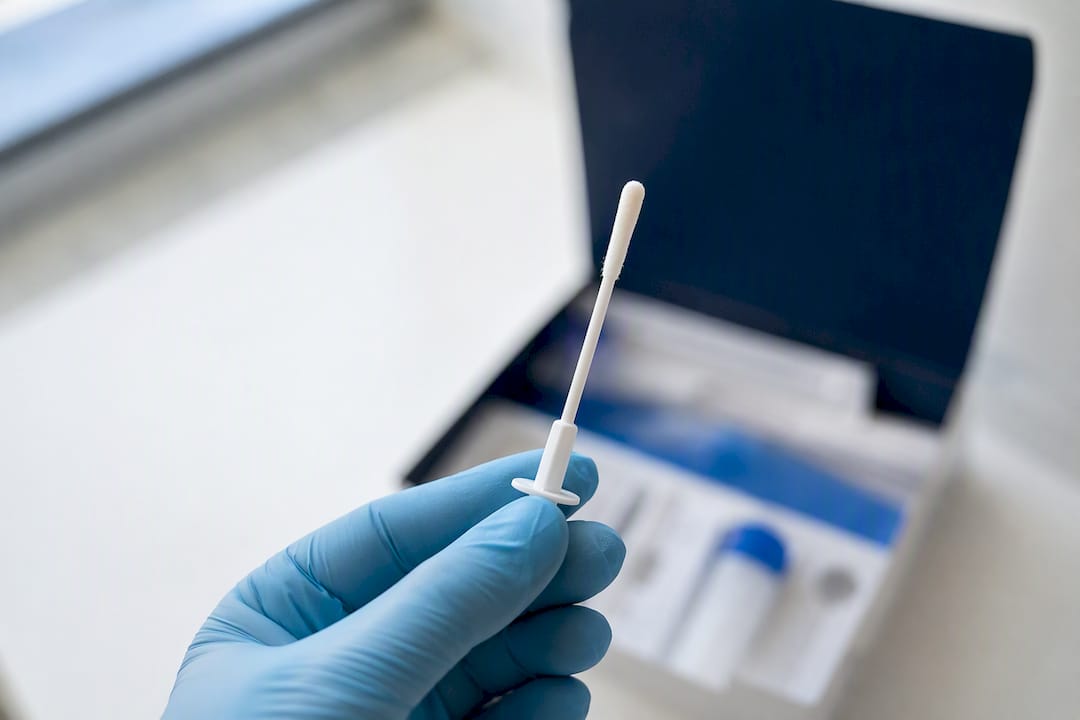
Hair stretches detection out to roughly 90 days, capturing a much longer usage history. That makes it valuable for pre-employment screening in high-risk roles where an employer wants a longer look-back, but hair testing won’t catch very recent use since it takes days for drug metabolites to show up in new hair growth near the scalp. Cost also runs higher than urine, and turnaround for hair tests tends to run longer.
MedlinePlus’s overview of drug testing methods confirms this same tradeoff pattern: every specimen type has a different detection window and different limitations, and point-of-care screens across all specimen types are presumptive until confirmed.
Here’s how the choice usually shakes out in practice:
- Choose urine for standard pre-employment, random, and DOT-mandated testing where cost and legal precedent matter most.
- Choose saliva when you need to confirm very recent impairment, such as post-accident or reasonable-suspicion testing.
- Choose hair when you need a longer look-back window for a sensitive role, or when a candidate has a history that warrants deeper scrutiny.
- Combine specimen types only when policy and budget genuinely justify it. Most employers don’t need to.
Adulteration attempts are the main reason observed collection and SVT exist at all. Dilution, substitution, and additives that mask drug presence show up through specimen validity checks that measure creatinine, specific gravity, temperature, and pH at the time of collection. A urine sample that comes back “normal” on all four counts is a lot harder to argue with in a dispute than one collected without any validity screening. A side-by-side breakdown of hair versus urine testing goes deeper into how these two specimen types differ in cost, turnaround, and use case if you’re weighing which to specify in a testing policy.
How Do You Interpret a Positive or Negative Result?
A positive result on a point-of-care 12 panel screen is not proof of drug use. It’s a signal that warrants confirmation, and treating it as anything more than that is how employers end up in wrongful termination disputes.
Point-of-care immunoassay devices work by detecting antibody reactions to drug metabolites, and those reactions aren’t perfectly specific. Certain over-the-counter medications, prescription drugs, and even some foods can trigger a false positive on an initial screen. Common culprits include:
- Pseudoephedrine and other decongestants, which can cross-react on amphetamine screens.
- Poppy seeds, which contain trace opiate alkaloids that can trigger opiate positives in rare cases.
- Prescription benzodiazepines or opioids, taken legitimately under a doctor’s care, which will screen positive because the immunoassay can’t distinguish a valid prescription from illicit use.
- Certain antidepressants and antihistamines, which occasionally cross-react on TCA panels.
- NSAIDs like ibuprofen, historically linked to rare false positives on THC or barbiturate screens depending on the assay.
None of these possibilities matter if the sample never gets confirmed. That’s the whole point of running GC/MS (gas chromatography/mass spectrometry) or LC/MS-MS (liquid chromatography tandem mass spectrometry) on any presumptive positive. These confirmatory methods identify the exact molecular structure of what’s in the sample, not just a chemical class reaction, and they’re accurate enough to hold up in employment litigation and legal proceedings. A PMC-published review of drug testing best practices treats confirmatory testing and MRO review as standard practice before any employer takes adverse action on a screening result.
A presumptive positive on a point-of-care immunoassay is a starting point for investigation, not an endpoint for discipline. Confirmatory testing exists precisely because the initial screen trades some specificity for speed, and that tradeoff only works if there’s a second, more precise check before consequences follow.
That’s where the medical review officer (MRO) comes in. The MRO is a licensed physician trained in substance abuse testing who reviews every confirmed positive result before it reaches the employer. Their job includes contacting the individual directly, reviewing any prescription documentation, and determining whether a legitimate medical explanation accounts for the result. If someone tested positive for oxycodone because they have an active, valid prescription, the MRO verifies that and typically reports the result to the employer as negative, or “verified negative due to legitimate medical explanation.” Only results without a valid explanation get reported to the employer as positive.
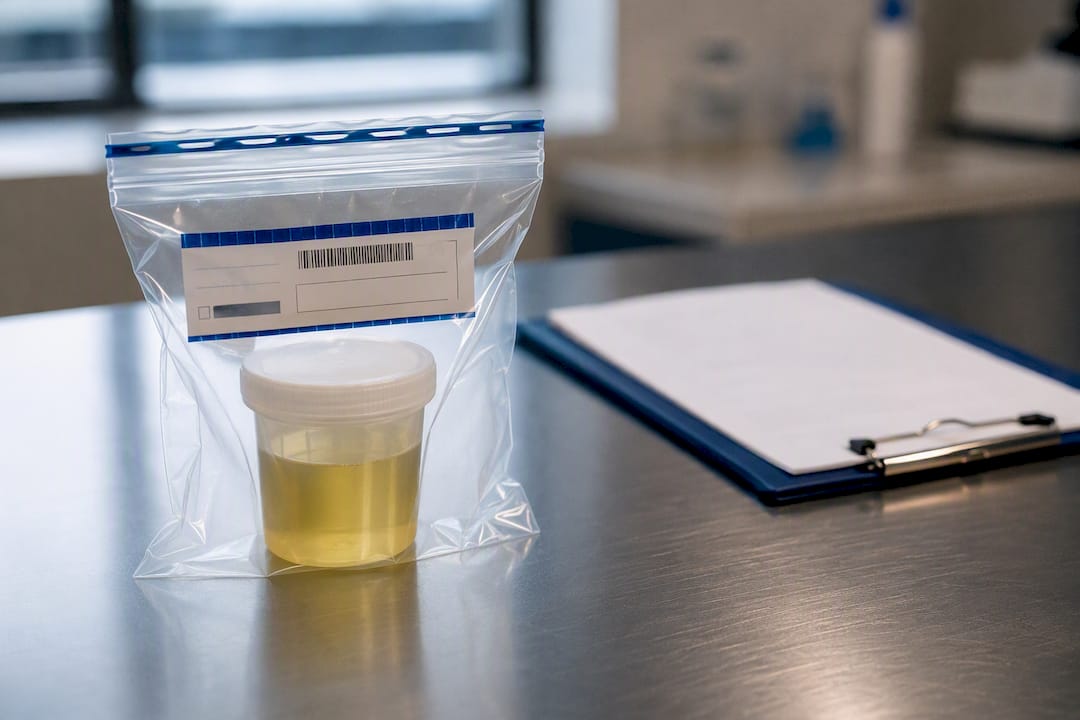
Chain-of-custody documentation runs alongside all of this. Every hand that touches a specimen, from collector to courier to lab technician, gets logged with a timestamp and signature. Specimen validity testing checks the sample itself for tampering. Both matter because a result that can’t be traced through an unbroken chain of custody is far easier to challenge in an employment dispute, regardless of what the lab actually found.
What’s the Difference Between DOT and Non-DOT Drug Testing?
DOT drug testing follows federal rules set by the Department of Transportation and applies to safety-sensitive transportation employees: commercial drivers, pilots, rail workers, and similar roles. Non-DOT testing is whatever an employer chooses to build on top of, or instead of, that baseline.
The DOT program tests for a fixed panel that mirrors the SAMHSA-5: marijuana, cocaine, opiates, amphetamines, and PCP. It doesn’t include the seven additional classes found in a typical 12 panel screen. That means if you’re running a DOT-regulated transportation workforce and you also want to catch benzodiazepine misuse, methadone diversion, or MDMA use, you need a separate non-DOT panel layered on top, or an expanded panel your DOT program explicitly permits as a supplement. SAMHSA’s workplace drug testing resources lay out this baseline in detail and are the reference point most compliance programs build from.
CLIA-waived point-of-care testing plays a role in both DOT and non-DOT contexts, but the rules differ. CLIA (Clinical Laboratory Improvement Amendments) waiver status means a device is simple and accurate enough to be used outside a high-complexity lab setting, often right at a collection site. Some 12 panel POC devices carry both CLIA-waived status and FDA 510(k) clearance, which affects where and how they can legally be administered. DOT-regulated testing has stricter requirements around certified laboratories and specific collection protocols regardless of what POC device status looks like, so employers running DOT programs should confirm with their testing provider exactly which parts of the process can use CLIA-waived POC screening and which must go through a certified lab from the start.
Pro Tip: If you operate in more than one state, check your state’s specific drug testing statutes before finalizing a policy. Several states restrict marijuana testing for non-safety-sensitive roles or require specific notice language, and a policy written only to DOT/SAMHSA standards can still run afoul of state law.
A basic compliance checklist for any 12 panel program, DOT or not, should include:
- A written drug testing policy, distributed and acknowledged before any testing begins.
- Documented, informed consent from every individual tested.
- Complete chain-of-custody (COC) forms for every specimen.
- A designated MRO reviewing every confirmed positive.
- Retained documentation for the legally required retention period.
- A state-law review, since testing rules for marijuana and other substances vary significantly by state.
Setting Up a 12 Panel Testing Program: A Step-by-Step Guide
Getting a 12 panel drug testing program running correctly takes more than picking a test kit off a supply site. Here’s the sequence that keeps a program both accurate and defensible.
- Define the analyte list first. Decide which 12 classes you actually need based on your industry’s risk profile, then confirm your vendor’s exact cutoffs for each one.
- Choose your specimen type. Urine covers most standard programs; add saliva or hair only if your use case genuinely calls for a different detection window.
- Confirm CLIA and FDA status. If you’re testing on-site, verify the specific device carries CLIA-waived status and, where relevant, FDA 510(k) clearance for the analytes you need.
- Write the policy language. Spell out consent, consequences, retesting rights, and how confirmatory testing and MRO review fit into the process.
- Vet procurement questions with your vendor or clinic. Ask directly: What are your cutoffs? Is specimen validity testing included? What’s your confirmatory lab turnaround? How is pricing structured, per test or bundled?
Once the program is designed, the actual collection workflow matters just as much as the paperwork behind it. Observed or unobserved collection should be spelled out in policy ahead of time, not decided on the fly at the collection site. Specimen validity testing, checking temperature, creatinine, and specific gravity at intake, catches most tampering attempts before a sample ever reaches a lab. Every specimen needs clear labeling and a complete chain-of-custody form signed at each handoff point.
Turnaround expectations follow a predictable pattern across most programs:
- Point-of-care screening: results in minutes, typically 5 to 15 minutes depending on the device.
- Confirmatory lab testing on any presumptive positive: usually 24 to 72 hours.
- MRO review of confirmed positives: added on top of lab turnaround, often same-day to a few days depending on how quickly the reviewing physician reaches the individual tested.
When you’re comparing vendors or clinics, the questions that actually separate a solid program from a shaky one come down to specifics: exact cutoff values in writing, whether SVT is built into the collection process by default, CLIA/FDA status documentation you can keep on file, and pricing that’s structured clearly rather than bundled into vague per-employee estimates that hide add-on fees.
How Total Tox Delivers Reliable 12 Panel Testing for Employers
Everything covered above, panel configuration, confirmatory testing, chain-of-custody, MRO review, only matters if the program executing it actually runs tight. That’s the gap Total Tox is built to close for employers and individuals in the Bronx, Westchester, and the surrounding New York area.
Total Tox runs walk-in testing with most collections completed in under 15 minutes, which matters when a supervisor is trying to get a driver back on the road or a construction hire started without losing a shift to scheduling delays. Results typically come back within 24 hours, and every result that requires it goes through MRO review before it reaches the employer, exactly the safeguard this guide has been describing throughout the confirmatory testing and interpretation sections.
The workflow lines up with what’s outlined above: proper specimen collection, chain-of-custody documentation on every sample, and coordination with confirmatory labs when a presumptive positive needs a GC/MS or LC/MS-MS follow-up. Total Tox also handles DOT and non-DOT programs side by side, along with immigration medical exams and CDL physicals, which means a single visit can often cover more than one compliance requirement.
For readers ready to move from research to action, scheduling is straightforward: walk in or call ahead, bring valid photo ID, and know your testing type (DOT, pre-employment, random, or reasonable suspicion) before you arrive so the right panel and paperwork are ready. You can review the full range of testing and physical exam services to see exactly what’s covered before you schedule.
What Employers Should Take Away From This Guide
A 12 panel drug test screens urine for the SAMHSA-5 baseline plus seven added drug classes, but exact configurations, cutoffs, and confirmatory workflows vary by provider and must be verified before testing begins.
| Point | Details |
|---|---|
| Panel composition varies | The 12 panel isn’t federally standardized beyond the SAMHSA-5; always confirm the exact analyte list and cutoffs with your provider. |
| THC has the widest detection window | Urine THC detection ranges from days for single use to 30+ days for chronic users, unlike most other analytes. |
| Screens are presumptive | Point-of-care positives require GC/MS or LC/MS-MS confirmation and MRO review before any adverse action. |
| DOT and non-DOT differ | DOT testing follows a fixed five-drug federal panel; a full 12 panel screen requires a separate or expanded non-DOT program. |
| Total Tox delivers audit-ready results | Walk-in collection, MRO-reviewed reports, and 24-hour turnaround support DOT and non-DOT employer programs across the Bronx area. |
Frequently Asked Questions About 12 Panel Drug Testing
What does a 12 panel drug test check for? It checks a urine sample for 12 drug classes, typically the SAMHSA-5 (amphetamines, cocaine, THC, opiates, PCP) plus seven more, commonly benzodiazepines, barbiturates, methadone, oxycodone, buprenorphine, MDMA, and tricyclic antidepressants.
How accurate is a 12 panel drug test? The initial point-of-care screen is presumptive and can produce false positives from cross-reacting medications. Accuracy improves substantially once a positive goes through GC/MS or LC/MS-MS confirmatory testing, which is why that step is standard before any employment decision.
Can a 12 panel drug test detect alcohol? Standard 12 panel configurations don’t include alcohol by default, but some providers add ETG (ethyl glucuronide) as an optional analyte to detect recent alcohol use.
How long does THC stay detectable on a 12 panel urine test? It depends heavily on use frequency. A single use can clear in about three days, while chronic daily use can remain detectable for 30 days or longer.
Is a 12 panel drug test the same for DOT and non-DOT employers? No. DOT testing follows a fixed federal five-drug panel. A full 12 panel screen falls outside DOT’s baseline and applies through separate or supplemental non-DOT testing policies.
What happens if I test positive but have a valid prescription? The medical review officer contacts you directly to review prescription documentation. If the explanation is legitimate, the result is typically reported to your employer as negative rather than positive.
Sources
- Objective testing — urine and other drug tests (PMC)
- Drug testing — MedlinePlus
- Workplace drug testing resources — SAMHSA