
Most standard employment background checks return within 1 to 3 business days, and delays are usually caused by county court or manual record searches, identity mismatches, or slow third-party verifications. If your check has passed the one-week mark, following up with your employer or the screening company is reasonable and not pushy. A short wait past that window doesn’t usually signal a problem with your history.
TL;DR:
- Court system variability and staffing shortages can cause delays of up to 15 business days for county criminal searches.
- Identity mismatches from common names or incorrect SSNs often trigger manual reviews that add several days to the process.
- FBI fingerprint checks take longer because they are processed in order without expedited options, sometimes extending to several weeks.
- Promptly responding to verification requests and verifying personal information before submission can significantly reduce processing times.
- Employers should verify candidate data early, choose screening providers with direct court access, and follow FCRA guidelines to avoid unnecessary delays.
Table of Contents
- Common causes of background check delays
- How long each background-check component typically takes
- What candidates can do right now to reduce or resolve delays
- What employers and hiring teams should do during delays
- Legal rights, FCRA timelines, and state law impacts
- Total Tox perspective: what we see and how clinics reduce delays
- A candid closing take on background check delays
- How Total Tox can help you move faster through screening
- Sources
- FAQ
Common causes of background check delays
Court systems are the biggest variable in how fast a check moves. Some county courts have fully digitized, searchable records, while others still require someone to physically pull files, which can add days to a single search.

Staffing shortages at courthouses and screening firms compound the problem, especially around holidays or during seasonal hiring surges when volume spikes faster than staff can keep up.
Identity mismatches are another frequent culprit. Common names, past aliases, or a transposed Social Security number digit can trigger a manual review to confirm the report matches the right person.
- Court access varies by county, and paper-based jurisdictions take longer to search
- Holiday closures and staffing shortages create temporary backlogs
- Common names, aliases, or SSN typos trigger manual identity confirmation
- Missing or incomplete candidate information stalls the process until corrected
- Third-party verifiers (employers, schools, licensing boards) respond at their own pace
Incomplete applicant data is often self-inflicted and easy to fix: a missing middle name, an old address left off the form, or an unsigned authorization can hold up an otherwise clean report. Verification requests sent to former employers or schools also depend entirely on how quickly that third party responds, which is largely out of the screening company’s control.
Pro Tip: Double-check your legal name, past addresses, and SSN before submitting any screening authorization. A single typo can trigger a manual identity review that adds days.
How long each background-check component typically takes
A background check is really several smaller searches bundled together, and each moves at its own speed. Instant database scans, which pull from aggregated criminal and sex offender registries, usually return in minutes to one business day.
- Instant database scans: minutes to 1 business day
- County criminal court searches: 1 to 15 business days depending on digitization and backlog
- FBI fingerprint and identity-history checks: days to several weeks, with no expedited option
- Employment and education verification: 2 to 7 business days depending on how fast the respondent replies
- Drug testing and MRO review: same day to about a week for confirmatory or medical review steps
- International checks: several weeks to a few months
The FBI processes identity-history challenge requests strictly in the order received and offers no expedited service, so fingerprint-based checks can take noticeably longer than a standard county or database search. That single fact explains why a check that looks fast on paper can still stretch into weeks once fingerprints enter the picture.
What candidates can do right now to reduce or resolve delays
You have more control over the timeline than it might feel like. A few concrete steps can shave real time off the process.
- Confirm your legal name, any prior names, current SSN, and full address history before you submit your authorization
- Respond immediately to any request from the screening company for documents or clarification
- Ask your prospective employer which screening company they use, so you can request a copy of your own report directly if something looks stuck
- If you spot an error, file a dispute in writing with the screening company, which must reinvestigate under the FCRA dispute process within 30 days, with certain circumstances extending that to 45 days
- Follow up with the employer politely after about a week rather than staying silent or repeatedly emailing
Pro Tip: Keep every email and document related to your background check in one folder. If a dispute becomes necessary, having dates and copies ready speeds up the reinvestigation.
What employers and hiring teams should do during delays
Delays test patience on both sides, and how an employer handles them affects whether a strong candidate stays engaged or walks away. Setting expectations early, and giving status updates when a component is stuck, keeps candidates from assuming the worst.
- Tell candidates roughly what to expect and update them if a specific component is running long
- Verify applicant data for accuracy before submitting the order, since errors are a leading cause of manual holds
- Choose a screening partner with strong direct court access rather than one that relies heavily on manual retrieval
- Never take adverse action until the complete report arrives, and follow FCRA pre-adverse and adverse action steps in order
- Where legally defensible and properly documented, consider a conditional start pending final results for time-sensitive roles
- Track delay patterns with your provider over time to catch recurring bottlenecks in specific counties or verification types
Legal rights, FCRA timelines, and state law impacts
Federal law sets firm boundaries on how disputes and adverse decisions must be handled, even when the underlying search takes longer than anyone would like. A consumer reporting agency must generally complete a reinvestigation of a disputed item within 30 days, with limited circumstances allowing an extension to 45 days.
- Candidates can request a free copy of their report and dispute inaccuracies before an employer finalizes a decision
- Employers must follow pre-adverse and adverse action notice steps before rejecting a candidate based on a report
- The EEOC’s guidance on background checks reminds employers that background information cannot be used in a discriminatory way and must align with FCRA procedures
- State-level reforms that seal or restrict access to certain criminal records shift work from automated database searches to slower manual retrieval, adding time in those jurisdictions
Employers must avoid discriminatory use of background checks and follow FCRA procedures when relying on third-party consumer reports for employment decisions. EEOC guidance on background checks
Total Tox perspective: what we see and how clinics reduce delays
The drug-testing leg of a background screen is one piece employers and candidates can actually speed up. Walk-in collections and same-day MRO-reviewed results, which is how Total Tox structures its own testing process, cut out the waiting that comes from scheduling a lab appointment days out.
- Walk-in collections avoid the multi-day wait typical of scheduled lab visits
- Electronic Live Scan fingerprinting skips the mailing and manual scanning that slows paper fingerprint cards
- Careful ID matching and chain-of-custody handling at intake prevent collection errors that would otherwise trigger a retest
- MRO review completed quickly after collection keeps the drug-test component from becoming the slowest part of the check
A candid closing take on background check delays
Most delays come down to logistics, not red flags in your history. Stay proactive: submit accurate information the first time, choose electronic submissions when they’re offered, and keep a paper trail of your communications. If something looks genuinely wrong, use your dispute rights and loop in both the screener and the employer right away.
— Total Tox
How Total Tox can help you move faster through screening
If a drug test or fingerprint step is the piece holding up your background check, Total Tox’s services are built to remove that bottleneck. Same-day walk-in collections, electronic Live Scan submissions, and audited MRO-reviewed reporting mean that leg of the process rarely becomes the slow part.
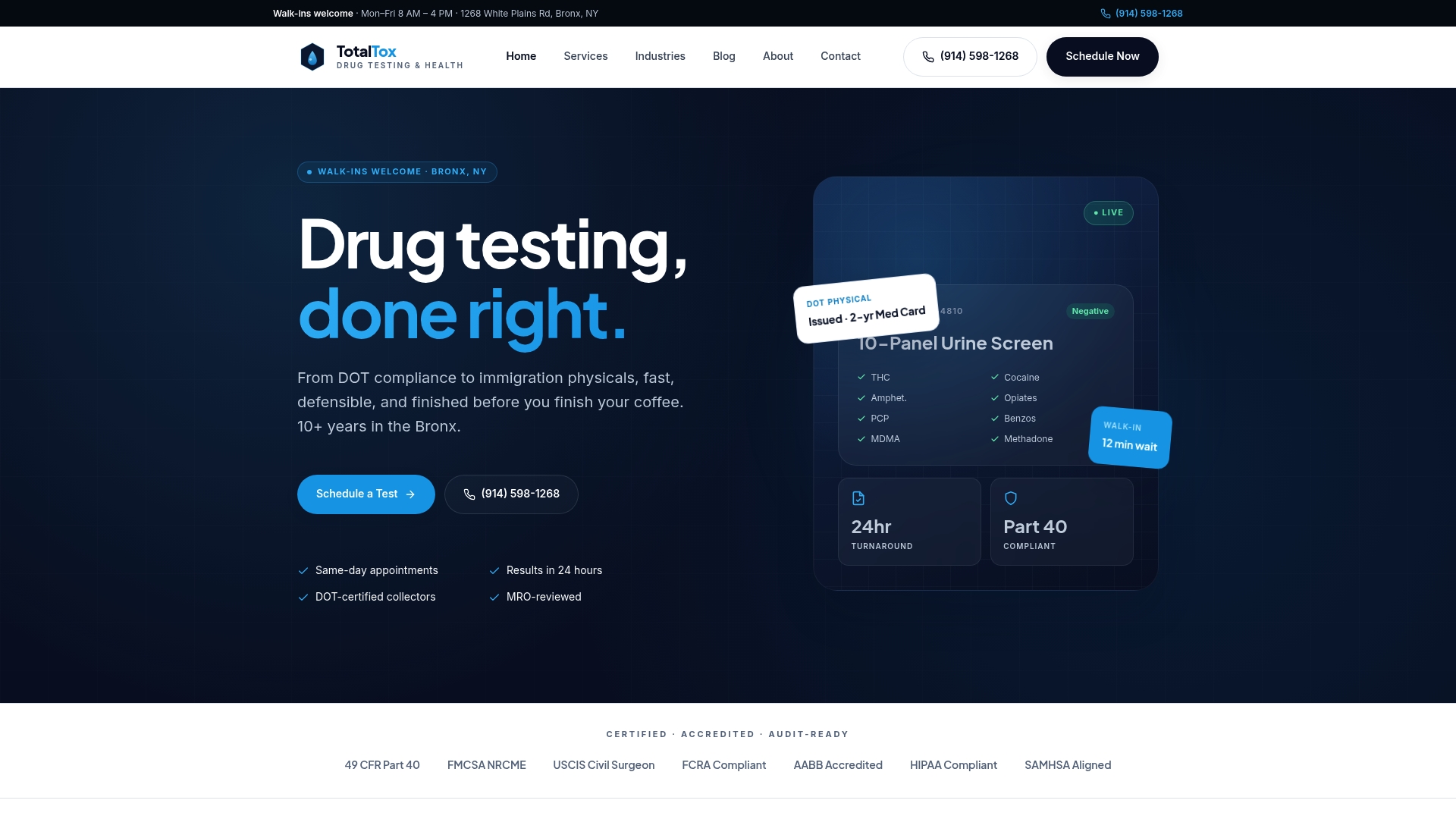
- Employers with DOT-regulated hires or tight start dates may benefit from same-day collection and next-day results
- Candidates facing an immigration deadline or an urgent start date may be able to walk in without scheduling ahead
- Bring a valid photo ID and any employer paperwork to avoid intake delays at your appointment
Schedule your visit at Total Tox to keep your drug test or fingerprinting from becoming the reason your background check runs long.
Sources
- FBI — Identity History Summary Checks FAQs
- FTC and Board report to Congress: The Fair Credit Reporting Act dispute process
- EEOC — Background checks: What job applicants and employees should know
FAQ
Why is it taking so long for my background check to come back?
The most common reasons are a county court search that requires manual retrieval, a third-party verifier that hasn’t responded yet, or an identity mismatch flagged for review. None of these usually indicate a problem with your record, just a slower step in the process.
Why is the background check delayed?
Delays typically trace back to court digitization gaps, staffing backlogs, or incomplete applicant information rather than anything found in the report itself. Fingerprint-based FBI checks add extra time because the FBI processes them strictly in order received with no option to expedite.
How long are background checks taking right now?
Standard checks generally return within 1 to 3 business days, while components involving county courts, fingerprints, or international records can extend that to weeks. If your check passes the one-week mark, it’s reasonable to follow up with the employer or screening company.
Why is my background check taking so long?
If more than a week has passed, ask the employer which screening company handled your check so you can request your report directly. Under federal rules, you’re entitled to a copy of your report and can dispute any inaccuracies you find, and the reinvestigation must generally happen within 30 days.