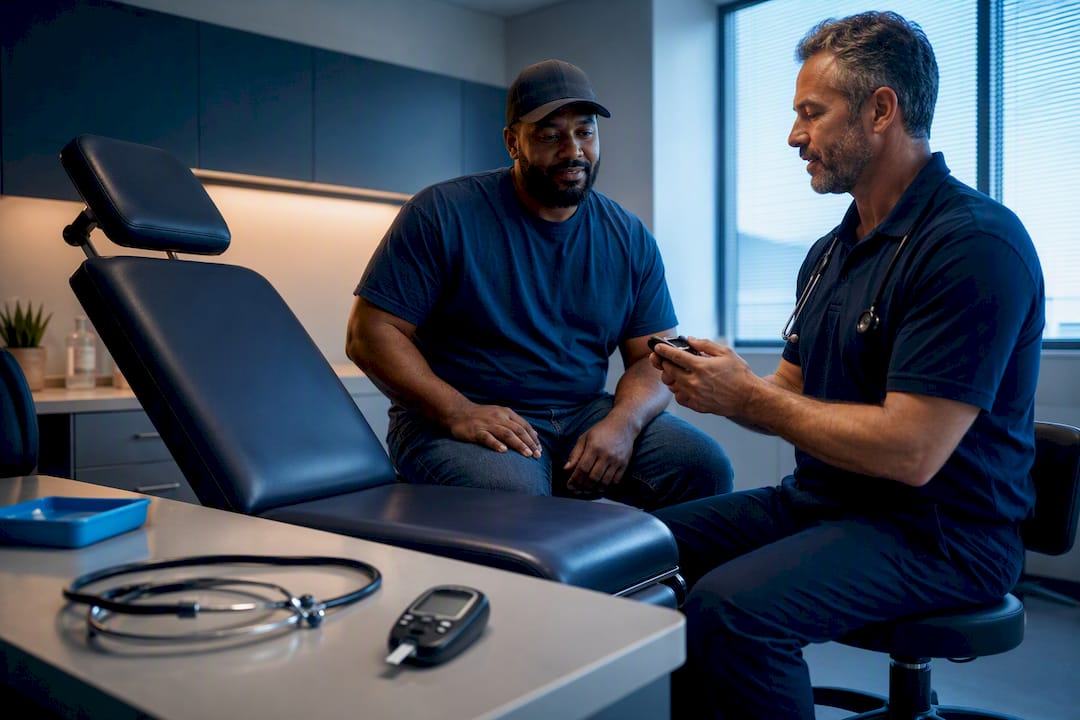
Yes, drivers with diabetes, including those on insulin, can pass a DOT physical when they meet FMCSA’s individualized assessment standard. The two items that make or break the exam are a properly completed Insulin-Treated Diabetes Mellitus Assessment Form (MCSA-5870) and a sufficient duration of downloadable glucose-monitoring records. Miss either one, and a certified medical examiner may still qualify you, just not for the full 12 months.
TL;DR:
- A complete and recent MCSA-5870 form, signed within 45 days, along with three months of downloadable glucose monitoring data, is essential for qualifying for the full 12-month certification.
- Examiners review multiple factors beyond A1C levels, including hypoglycemia history and presence of complications, so stable control does not guarantee a longer certification.
- Preparing by scheduling the clinician visit first, gathering all records, and confirming examiner registration minimizes the risk of shorter or denied certifications.
- Missing or incomplete documentation, especially electronic glucose data or a form outside the 45-day window, often results in a shorter certification period rather than automatic disqualification.
- Total Tox offers walk-in DOT physicals that can assist in verifying documentation compliance, helping drivers manage paperwork before the exam to ensure FMCSA standards are met.
Table of Contents
- What Are the FMCSA Rules for Diabetes and DOT Physicals?
- What Does the MCSA-5870 Form Require, and Why Does the 45-Day Rule Matter?
- What Do Examiners Actually Look at Besides A1C?
- How Should You Prepare Before Your DOT Exam?
- Why Same-Day Documentation Help Matters for Drivers With Diabetes
- Get Your DOT Physical Done Right the First Time
- A Straight Take on Diabetes and DOT Certification
- Key Forms and Regulations to Have on Hand
- Sources
- FAQ
What Are the FMCSA Rules for Diabetes and DOT Physicals?
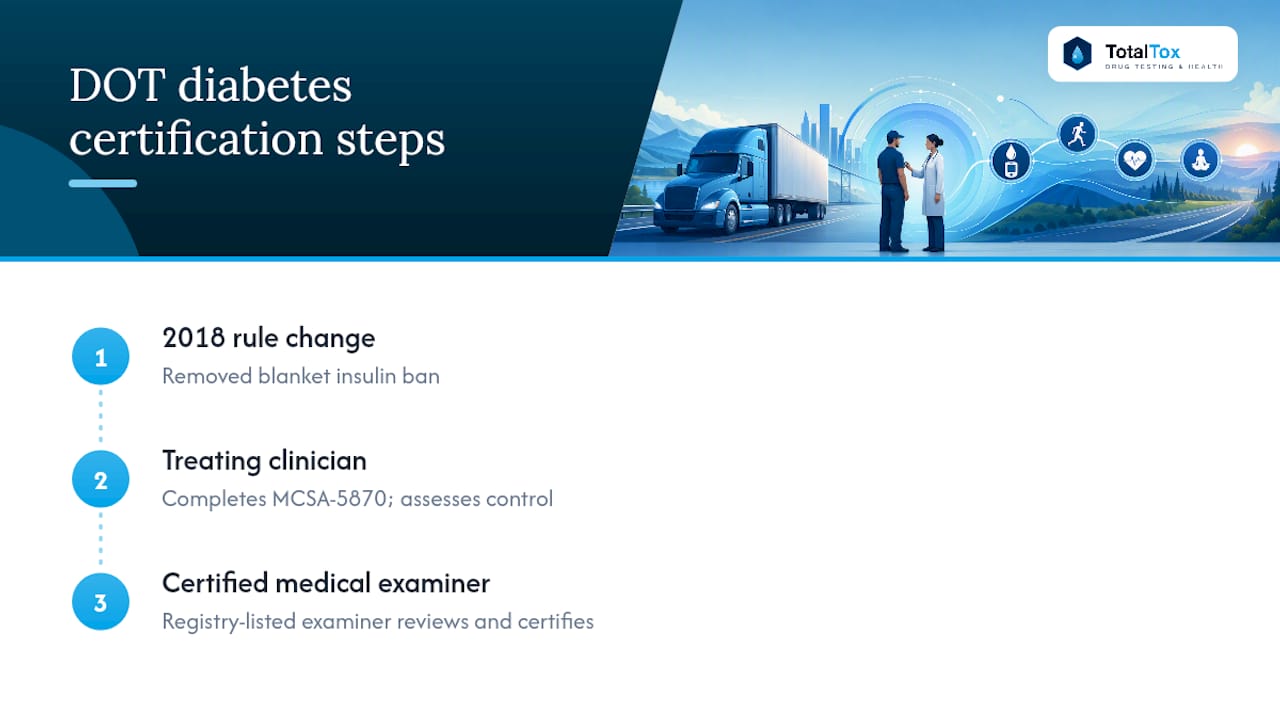
Commercial drivers with diabetes are evaluated under 49 CFR §391.41, §391.45, and the diabetes-specific standard in 49 CFR §391.46. Until 2018, insulin-treated drivers faced a near-automatic disqualification unless they qualified for a narrow federal exemption program. That changed with a final rule that removed the blanket restriction and replaced it with individualized assessment, letting a certified medical examiner weigh each driver’s actual health picture instead of applying a one-size-fits-all ban.
The 2018 rule change built a two-step process into the certification path. First, your treating clinician, the doctor who actually manages your diabetes, completes the MCSA-5870 and evaluates your control, complications, and hypoglycemia history. Second, a certified medical examiner reviews that form alongside a standard DOT physical exam and decides whether you’re safe to drive and for how long.
That second step only counts if the examiner is listed on the National Registry of Certified Medical Examiners. FMCSA requires this because examiners have to pass specific training and testing on commercial driver medical standards, diabetes included. A physical performed by a doctor who isn’t on the registry doesn’t count toward your Medical Examiner’s Certificate, no matter how thorough the exam was. If you’re unsure whether your provider qualifies, ask directly before booking, or verify through the registry’s own listings.
What Does the MCSA-5870 Form Require, and Why Does the 45-Day Rule Matter?
The MCSA-5870 is where your treating clinician documents the clinical picture the examiner can’t get from a five-minute physical. The form asks for your insulin regimen, HbA1C history, how often you self-monitor, any episodes of severe hypoglycemia, and diabetes-related complications. Incomplete fields aren’t a technicality. An examiner can’t make an individualized assessment off a form with gaps, and that usually means a shorter certificate or a request to redo the paperwork.
Timing trips up more drivers than the medical content does. Under §391.46, the certified medical examiner must receive the signed MCSA-5870 no later than 45 days after your treating clinician dates it. Schedule the clinician visit too far ahead of your DOT exam, and the form goes stale before you get to the examiner’s office.
The other requirement that catches drivers off guard: FMCSA wants an adequate period of electronic glucose self-monitoring records, meaning data downloaded directly from your glucometer or continuous monitor, not a handwritten log or a phone screenshot.
- A downloadable, date-and-time-stamped report from your meter or CGM software.
- Continuous data covering a recent period leading up to the exam.
- A printable summary your clinician or clinic can attach to your file.
Without those records, the examiner may still certify you for a limited period shorter than the maximum allowed.
What Do Examiners Actually Look at Besides A1C?
There’s no federal A1C cutoff that automatically passes or fails you. FMCSA’s own guidance treats A1C as one data point among several: your monitoring consistency, your hypoglycemia history, and whether diabetes has caused downstream damage. A driver with an A1C of 8.5% but stable control and no severe lows can sometimes fare better than a driver with a “good” number and a recent hospitalization for low blood sugar.
Examiners specifically look for retinopathy, peripheral neuropathy (especially in the feet, given pedal control demands), kidney disease, and cardiovascular conditions common in long-standing diabetes. Any of these can shift the conversation from a routine certification to a request for specialist clearance.
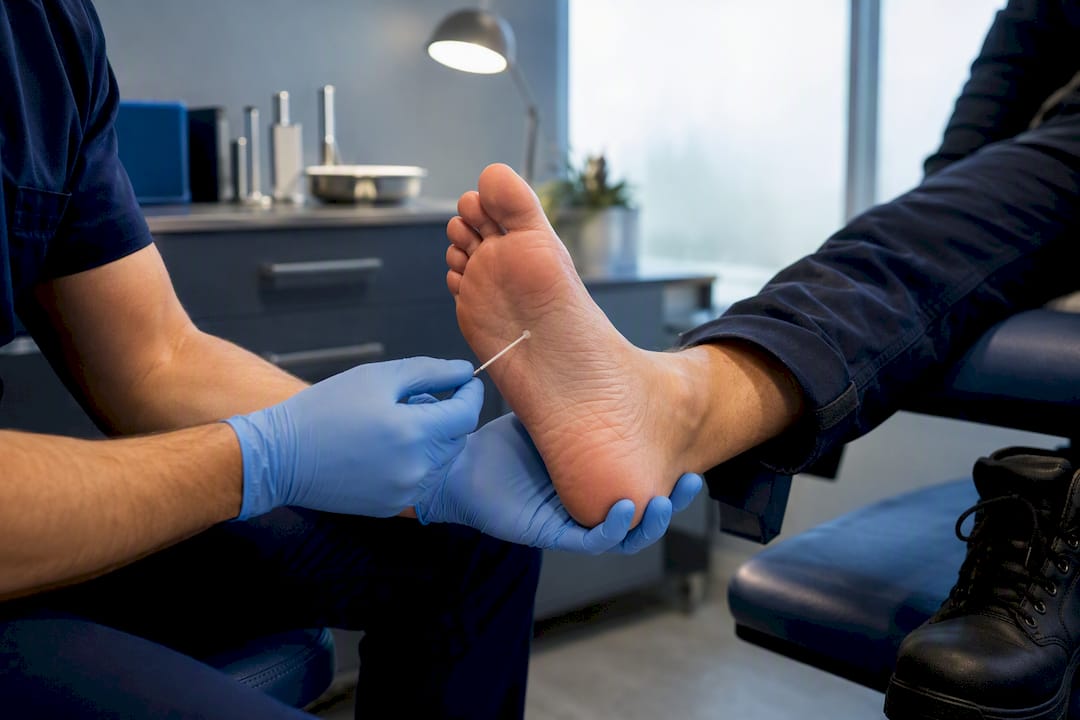
Red flags that shorten your certificate or trigger extra scrutiny include a severe hypoglycemic event in the past 12 months, inconsistent glucose logs, or an examiner unable to confirm treatment stability from the records provided. None of these are automatic disqualifiers. They’re reasons an examiner asks more questions or grants a shorter window instead of the maximum 12 months.
How Should You Prepare Before Your DOT Exam?
Getting certified on the first try comes down to sequencing, not luck. Here’s the order that avoids the most common holdups:
- Schedule your treating clinician visit first. This is where the MCSA-5870 gets completed, and it starts the 45-day clock.
- Pull three months of glucometer or CGM data before that appointment if possible, so your clinician can reference actual trends, not estimates.
- Get a recent HbA1C lab result, ideally drawn within the last three months.
- Confirm your medical examiner is listed on the National Registry before you book the appointment.
- Schedule the DOT exam within 45 days of your clinician signing the MCSA-5870.
- Bring everything physically or digitally: the signed form, the downloadable glucose report, your HbA1C result, a current medication list, and any specialist notes on complications.
If you manage diabetes without insulin, you won’t need the MCSA-5870, but bringing a recent A1C and a treatment summary still speeds things along, since the non-insulin assessment form (MCSA-5872) asks for similar background even though the standard itself is less restrictive.
Pro Tip: If your glucose meter can’t export a printable report, ask your clinician’s office before the appointment, not the morning of. Many practices can generate a compatible download in a few minutes if you give them advance notice.
Why Same-Day Documentation Help Matters for Drivers With Diabetes
The paperwork trips up more insulin-treated drivers than the medical exam itself. A walk-in checklist helps, but clinic staff who deal with MCSA-5870 submissions daily can catch a missing field, help pull a glucometer download, or flag that your 45-day window is closing before you find out the hard way. Tell staff upfront that you’re insulin-treated and need diabetes-specific paperwork handled, not just a standard physical.
Get Your DOT Physical Done Right the First Time
There are options for walk-in DOT physicals that avoid booking weeks ahead and help ensure paperwork is in order. Drivers managing insulin-treated diabetes can receive assistance verifying that glucose-monitoring records meet the electronic, downloadable format examiners require, and results come back with review and documentation suitable for FMCSA and DOT compliance.
Total Tox handles DOT physicals, DOT drug and alcohol testing, and the surrounding paperwork drivers need for certification, all under one roof, with no appointment required for most visits. If preparing for an exam with incomplete MCSA-5870 or glucometer records, mention it upon arrival so staff can help sort it out before the examination. For readers comparing DOT and non-DOT testing requirements as part of their compliance prep, this breakdown of non-DOT panel testing is a useful reference. Ready to schedule? Contact Total Tox directly to book your DOT physical and bring your insulin treatment records along.
A Straight Take on Diabetes and DOT Certification
The biggest misconception drivers walk in with is that a single A1C number decides everything. It doesn’t, and FMCSA’s own guidance is explicit about that. What actually sinks a certification more often isn’t the diabetes itself. It’s the paperwork: a treating clinician who leaves a field blank on the MCSA-5870, a driver who shows up with a paper logbook instead of a downloadable report, or someone who scheduled their clinician visit two months before the DOT exam and blew past the 45-day window without realizing it.
That’s frustrating, because it means drivers who are genuinely managing their diabetes well can still get a shorter certificate over something entirely fixable. The fix isn’t more medical scrutiny. It’s better sequencing, and knowing exactly what “three months of electronic records” means before you walk into either appointment. Treat the documentation with the same seriousness as your blood sugar control, and the exam itself tends to be the easy part.
— Total Tox
Key Forms and Regulations to Have on Hand
Before your exam, download the MCSA-5870 form, read 49 CFR §391.46 for the full standard, and confirm your examiner through the National Registry.
This article is general information, not a substitute for advice from a qualified doctor. Consult a qualified healthcare professional about your own circumstances before acting on anything here.
Sources
- 49 CFR § 391.46 — Physical qualification standards for an individual with diabetes mellitus treated with insulin for control
- Qualifications of Drivers; Diabetes Standard, 83 FR 47486 (Sept. 19, 2018) — FMCSA
FAQ
Can I Pass a DOT Physical With Diabetes?
Yes. Insulin-treated and non-insulin-treated drivers can both be certified under FMCSA’s individualized assessment standard when the required documentation is complete. For insulin-treated drivers, that means a properly completed MCSA-5870 and at least three months of electronic glucose records.
How High Can My A1C Be for a DOT Physical?
There’s no federal A1C cutoff that automatically passes or fails a driver. Examiners weigh your A1C alongside monitoring history, hypoglycemia episodes, and complications rather than judging a single lab value in isolation.
Can a Type 2 Diabetic Get a CDL?
Yes, whether you’re insulin-treated or managing type 2 diabetes without insulin. Non-insulin-treated drivers typically have a more straightforward path and can reference the MCSA-5872 form to document their treatment summary for the examiner.
What Happens if I Don’t Have Three Months of Glucose Records?
The examiner can still certify you, but typically for a shorter period, sometimes as little as three months, instead of the maximum 12-month certificate. Bringing complete, downloadable glucometer or CGM data from the start is the surest way to qualify for the longer window.
Does Total Tox Handle DOT Physicals for Drivers With Diabetes?
Yes, Total Tox performs DOT physicals and can help drivers verify that their glucose-monitoring records and MCSA-5870 paperwork meet FMCSA’s format requirements before the exam. Current pricing for physicals and testing is available directly on the provider’s site.