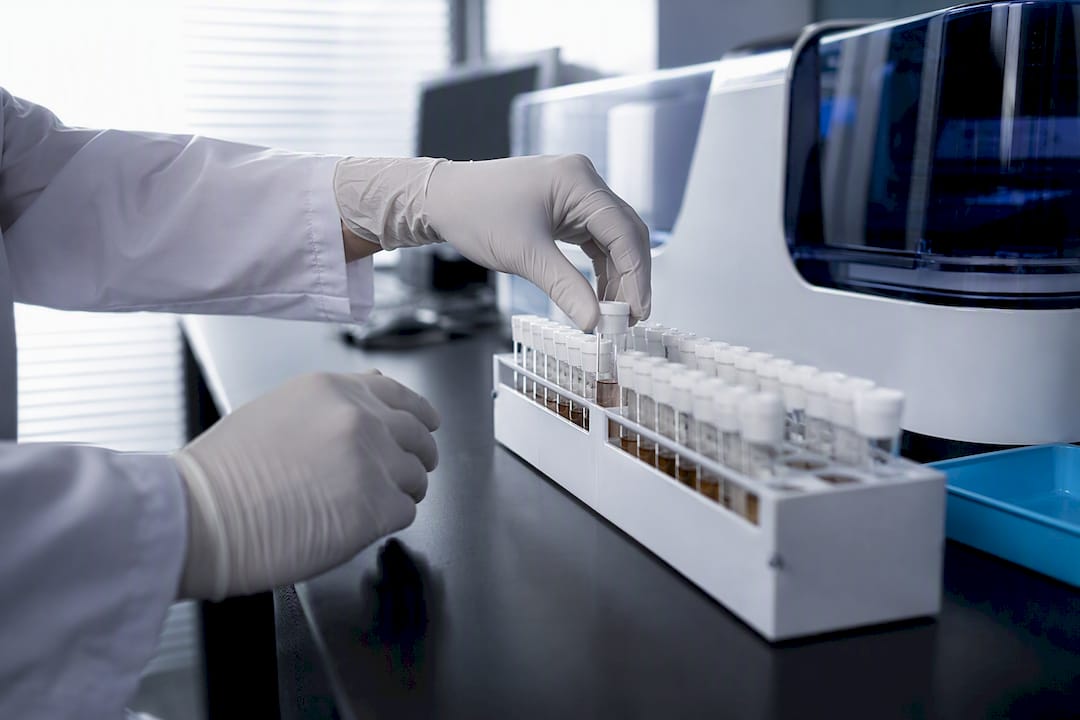
The DOT 5-panel screens for marijuana (THC), cocaine, amphetamines, opiates/opioids, and PCP. Every regulated test uses urine, processed at a laboratory certified by the U.S. Department of Health and Human Services (DHHS), under the procedural rules in 49 CFR Part 40. Within the opioid category, the panel actually covers several distinct analytes, not just one generic “opiate” flag, which is where a lot of confusion starts.
TL;DR:
- The DOT drug test panel screens for multiple analytes within each drug class, with an expanded opioid category that includes drugs like oxycodone and hydrocodone since 2018.
- Testing must be conducted at DHHS-certified labs using urine specimens only, with initial immunoassays followed by GC/MS confirmation for positives; instant or oral fluid tests are not authorized.
- Employers are required to perform six specific testing events, including pre-employment, random, reasonable suspicion, post-accident, return-to-duty, and follow-up, regardless of their preferences.
- A verified positive result must be reviewed by a Medical Review Officer, who determines its legitimacy, and the employee must undergo evaluation before returning to safety-sensitive duties.
- Non-DOT drug testing methods, like hair or saliva tests, do not meet DOT standards and cannot be substituted for DOT-mandated urine testing.
Table of Contents
- What Substances Are on the DOT Drug Test Panel?
- When Do Employers Have to Use the DOT Panel?
- How Are DOT Drug Test Specimens Collected and Analyzed?
- What Happens After a Non-Negative DOT Drug Test Result?
- Why Doesn’t a Regular Employer Drug Test Meet DOT Standards?
- A Clinic-Level View of What Actually Slows Testing Down
- Get a Compliant DOT 5-Panel Test Done Today
- Where to Read the Official DOT Testing Rules
- Sources
- FAQ
What Substances Are on the DOT Drug Test Panel?
Five drug classes make up the DOT panel, but “five” is deceptive. Each class can include multiple named analytes, and the opioid category has grown considerably since the 2018 rule change.
Here’s the actual breakdown regulators require labs to test for:
- Marijuana — THC metabolite
- Cocaine — benzoylecgonine metabolite
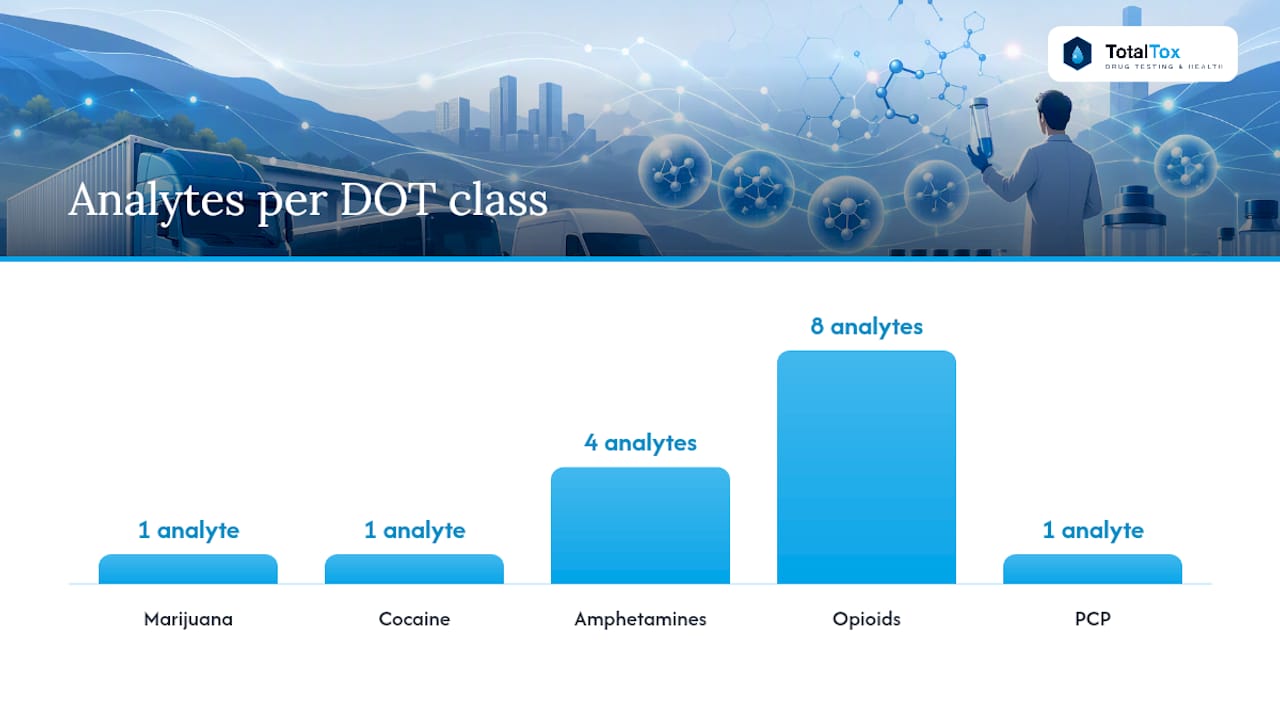
- Amphetamines — includes amphetamine, methamphetamine, MDMA, and MDA
- Opioids — codeine, morphine, 6-acetylmorphine (6-AM, a heroin marker), plus the expanded semi-synthetic group: hydrocodone, hydromorphone, oxycodone, and oxymorphone
- PCP — phencyclidine
The opioid expansion took effect January 1, 2018, and it’s the reason a “5-panel” test can flag eight or nine different substance names on a single report. Before that date, DOT tests looked for codeine and morphine derivatives but missed common prescription painkillers like oxycodone entirely. That gap let people test negative while actively using drugs that plenty of employers would consider just as disqualifying for safety-sensitive work. The DOT’s 2018 final rule closed it.
Confirmatory cutoffs matter here too. A specimen that screens positive on an initial immunoassay doesn’t automatically count as a violation. It moves to a confirmatory test, and DOT sets specific concentration thresholds for each analyte, including separate cutoffs for the expanded opioid group. Those numbers are published in Part 40’s cutoff tables and get referenced directly by FMCSA’s substance guidance. If you’re an employer building a policy document, point employees to that table rather than paraphrasing it. Cutoffs get updated, and paraphrased numbers age badly.
When Do Employers Have to Use the DOT Panel?
DOT-regulated employers don’t get to pick and choose when testing applies. Federal rules define six specific testing events, and missing any of them is a compliance failure regardless of intent.
- Pre-employment — before a candidate performs any safety-sensitive function.
- Random — unannounced, at a rate set by the employer’s specific DOT agency (FMCSA, FAA, FRA, and others each set their own minimum annual percentages).
- Reasonable suspicion — triggered by a trained supervisor’s specific, documented observations.
- Post-accident — required after qualifying accidents, on a strict timeline.
- Return-to-duty — after a violation, before the employee resumes safety-sensitive duties.
- Follow-up — a series of unannounced tests over at least 12 months, directed by a Substance Abuse Professional (SAP).
Different DOT agencies define “safety-sensitive” duty differently. A pipeline operator under PHMSA rules and a commercial driver under FMCSA rules both fall under Part 40, but the triggering job functions aren’t identical. Once a non-negative result comes in, the employer’s job is immediate: pull the employee from safety-sensitive duty, initiate the SAP referral process, and hold that removal until return-to-duty steps are complete.
How Are DOT Drug Test Specimens Collected and Analyzed?
Every step in this process is scripted by federal regulation, and the script leaves almost no room for improvisation. That rigidity is the point.
DOT testing requires a urine specimen, full stop. No blood, no hair, no oral fluid, and no instant-result cup tests are authorized for DOT-regulated screening. The specimen goes to a laboratory holding DHHS certification, where it runs through a two-stage process: an initial immunoassay screen, followed by gas chromatography/mass spectrometry (GC/MS) confirmation on any sample that screens positive. GC/MS is the only confirmatory method Part 40 permits, and it’s considerably more precise than the screening assay, which is why a presumptive positive doesn’t automatically become a reported violation.
A few specimen validity issues come up regularly at collection sites:
- Dilute specimens may require a recollection, sometimes under direct observation.
- Adulterated specimens (something added to mask results) get reported as a refusal to test.
- Substituted specimens (not consistent with human urine) also count as a refusal.
If a donor’s test comes back verified positive, they have a limited time window from notification to request a split-specimen reanalysis at a second, separate DHHS-certified lab, under Part 40’s specific procedure.
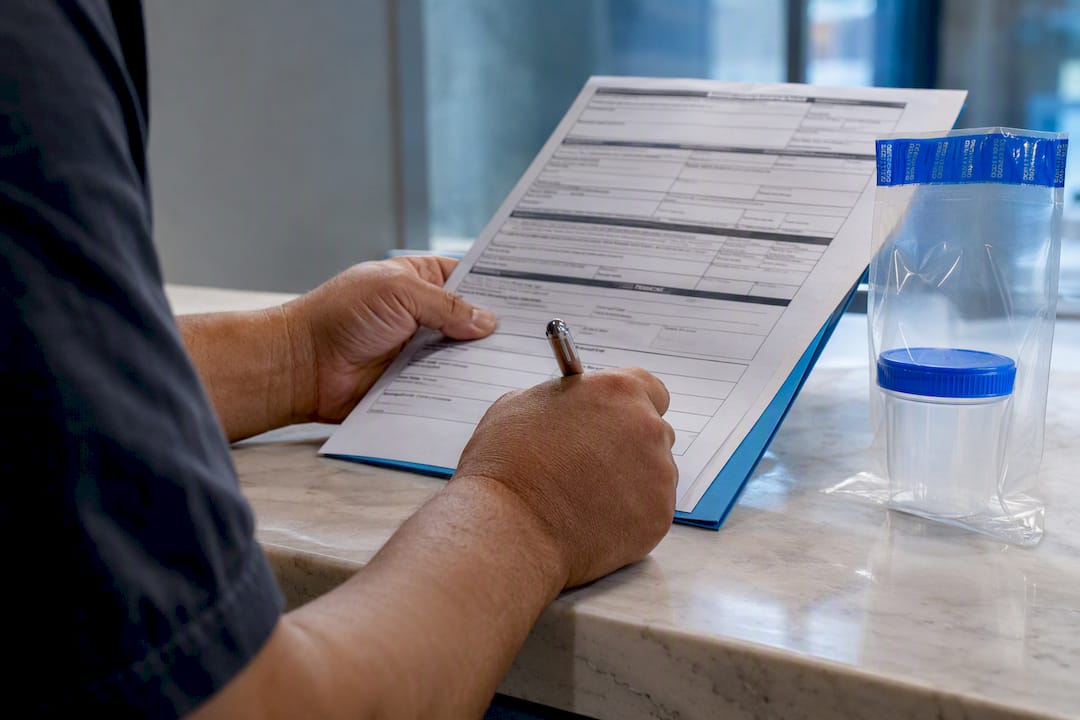
Pro Tip: Ask the collection site whether they can walk you through chain-of-custody documentation before you leave. A signed, complete Custody and Control Form (CCF) at the point of collection prevents nearly every dispute that comes up later.
What Happens After a Non-Negative DOT Drug Test Result?
A lab result doesn’t go straight to the employer. It goes to a Medical Review Officer (MRO) first, a licensed physician trained specifically to interpret DOT results and determine whether a legitimate medical explanation exists.
- The MRO contacts the donor directly and may ask about current prescriptions, recent medical treatment, or other explanations for a positive result.
- Verification outcomes fall into a few buckets: verified positive, verified negative, cancelled, or refusal to test.
- Once verified, the employer receives the result, typically via Copy 2 of the CCF, and must retain records per Part 40’s documentation requirements.
- The employee is immediately removed from safety-sensitive functions and referred to a SAP for evaluation.
- If the employee requests split-specimen testing within the 72 hour window, that request routes through the MRO to a second certified lab; the employer typically covers the cost unless a specific plan states otherwise, since the request must be honored regardless of payment arrangement.
Employers who skip any of these steps, or who let an employee stay on duty pending appeal, are exposed to real regulatory liability. Part 40 doesn’t treat “we were waiting to hear back” as a defense.
Why Doesn’t a Regular Employer Drug Test Meet DOT Standards?
A lot of workplaces run drug screens that look similar to the DOT panel but legally aren’t the same thing. The differences aren’t cosmetic.
- DOT testing is urine only, DHHS labs only, CCF forms only. No instant devices, no oral fluid, no hair.
- Non-DOT programs commonly use hair follicle testing, oral fluid, or expanded panels covering more substances than the DOT list.
- A non-DOT test, no matter how thorough, does not satisfy a DOT compliance obligation, and a DOT specimen legally cannot be repurposed for non-DOT testing on the same sample.
- Using a DOT Alcohol Testing Form (ATF) or CCF for a non-regulated program is a documented compliance mistake that auditors flag quickly.
A Clinic-Level View of What Actually Slows Testing Down
Most DOT testing delays we see aren’t regulatory, they’re logistical. A donor shows up without photo ID, or a supervisor sends someone for reasonable-suspicion testing without documenting the specific observations that triggered it. Both stall the process and create paperwork gaps that surface later during an audit.
Some clinics offer walk-in DOT collections with MRO-reviewed results and audit-ready documentation built into the process from the first form. Donors should bring valid photo ID and a list of current prescriptions, since that information speeds up MRO verification if a result needs review. Employers choosing a testing partner should confirm the provider uses DHHS-certified labs and can produce complete chain-of-custody paperwork on request. If a result comes back non-negative, involve the MRO immediately rather than waiting for the employee to raise it. And if a SAP referral is required, get that name in front of the employee the same day.
— Total Tox
Get a Compliant DOT 5-Panel Test Done Today
Total Tox is the faster path to a compliant result when a missed deadline or a stalled hire is the real cost. Walk-in DOT 5-panel testing typically wraps collection in under 15 minutes, with MRO-reviewed results delivered within 24 hours and documentation built to survive an audit, not just pass a glance.
That speed matters most for reasonable-suspicion and post-accident events, where the clock is already running before the employee walks in. Some providers handle the full range of DOT-regulated events, pre-employment, random, post-accident, return-to-duty, and follow-up, across transportation, construction, healthcare, and manufacturing clients throughout the Bronx and surrounding counties. If a random pull just came up or a new hire needs clearance before their start date, check current services and scheduling or contact Total Tox directly to get a walk-in slot today.
Where to Read the Official DOT Testing Rules
For the regulatory text itself, start with the DOT’s 5-panel notice, the full Part 40 procedures, and FMCSA’s substance guidance. Legal questions specific to your situation deserve a direct read of the primary text, not a summary.
Sources
- What substances are tested? | FMCSA
- Procedures for Transportation Workplace Drug and Alcohol Testing Programs | US DOT
FAQ
What panel drug screen does DOT use?
DOT uses a 5-panel urine test screening for marijuana, cocaine, amphetamines, opiates/opioids (including the expanded hydrocodone, hydromorphone, oxycodone, and oxymorphone group), and PCP, processed exclusively at DHHS-certified labs.
How many panels are there in a DOT drug test?
There’s one federally mandated panel, the 5-panel, though it covers multiple analytes within its opioid category following the 2018 expansion.
What panel drug test does CDL use?
Commercial driver’s license holders under FMCSA authority are tested using the same DOT 5-panel, since FMCSA is one of the DOT agencies bound by Part 40 procedures.
Can I request a retest if my DOT result comes back positive?
Yes. You have 72 hours from notification of a verified positive to request split-specimen reanalysis at a second, separate DHHS-certified lab, and the request goes through your MRO.
Does a hair or saliva test count as a DOT drug test?
No. DOT-regulated testing requires urine specimens only; hair follicle and oral fluid tests, even when accurate, don’t satisfy DOT compliance requirements.