
A blood pressure reading below a certain threshold gets you a full medical certificate valid for the maximum period allowed. Readings in slightly higher ranges usually reduce the certification period to shorter durations, including a possible one-time short-term card to start treatment. Extremely high readings lead to disqualification until controlled. These thresholds come straight from FMCSA guidance under §391.41(b)(6), and taking blood pressure medication generally caps your certification at one year regardless of how well controlled your numbers are.
TL;DR:
- Blood pressure readings between 140/90 and 159/99 generally result in a one-year certification, while readings 160/100 or higher typically lead to a three-month limit unless controlled.
- Proper blood pressure measurement technique is essential, with repeat readings after rest helping to confirm results and prevent false elevations from anxiety or incorrect methods.
- Being on blood pressure medication generally caps certification at one year, requiring a physician’s confirmation that the medication is effective and side effects are managed.
- For better readings, drivers should arrive rested, avoid caffeine and nicotine before the exam, and bring recent home blood pressure logs to help verify their baseline.
- Disqualifications due to high readings can be reversed by documenting improved readings over time, with follow-up medical proof of control speed up certification renewal.
Table of Contents
- What do FMCSA blood pressure thresholds mean for your medical certificate?
- How do examiners measure and confirm blood pressure at a DOT physical?
- What do examiners typically do at each blood pressure stage?
- Does blood pressure medication affect your DOT certification length?
- How can you prepare for better readings on exam day?
- What’s the path back to certification after a disqualifying reading?
- Total Tox perspective: what actually moves the needle on compliance
- Schedule a DOT physical or retest with fast, audit-ready results
- Sources
What do FMCSA blood pressure thresholds mean for your medical certificate?
The FMCSA breaks blood pressure into four stages, and each one carries a different consequence for your DOT medical card. Understanding where your numbers fall tells you almost exactly what a certified medical examiner is going to do with your paperwork.
Below 140/90 mmHg, you’re clear for the maximum certification: up to two years. Land between 140/90 and 159/99, and most examiners will issue a one-year card, since this range signals Stage 1 hypertension under FMCSA’s hypertension staging guidance. Push into 160/100 to 179/109, and you’re in Stage 2 territory, which usually gets you a single 3-month certificate, essentially a grace period to start treatment and show improvement. Hit 180/110 or higher, and federal rule treats that as an immediate disqualification until you’ve brought your pressure under control.
Examiners do have some discretion within these bands, particularly when weighing a single elevated reading against your medical history. The Medical Examiner’s Handbook gives them room to consider prior certifications and documented stability rather than treating one number as gospel.
How do examiners measure and confirm blood pressure at a DOT physical?
Proper technique matters more than most drivers assume. The certified medical examiner should have you seated, feet flat on the floor, arm supported at heart level, using a properly calibrated cuff. Measuring while you’re standing, talking, or with your arm dangling can inflate the reading by several points.
If your first number comes back high, a good examiner won’t stop there. Repeat readings after a few minutes of quiet rest are standard practice, partly to rule out white-coat hypertension, the temporary spike some people get purely from exam-room nerves. Bringing along a log of home or pharmacy-kiosk readings can help an examiner see your baseline instead of a one-off spike. The exam itself gets documented on the MCSA-5875 health history form and the MCSA-5876 examination report, which together become the official record backing whatever certification decision follows.

What do examiners typically do at each blood pressure stage?
Stage 1 readings (140–159/90–99) generally result in a one-year certificate, no strings attached beyond the shorter timeline. Stage 2 readings (160–179/100–109) come with a one-time 3-month card, and the expectation is clear: get evaluated, start treatment if needed, and come back with better numbers. Stage 3 readings (180/110 and above) mean disqualification until your pressure is documented as controlled, full stop.
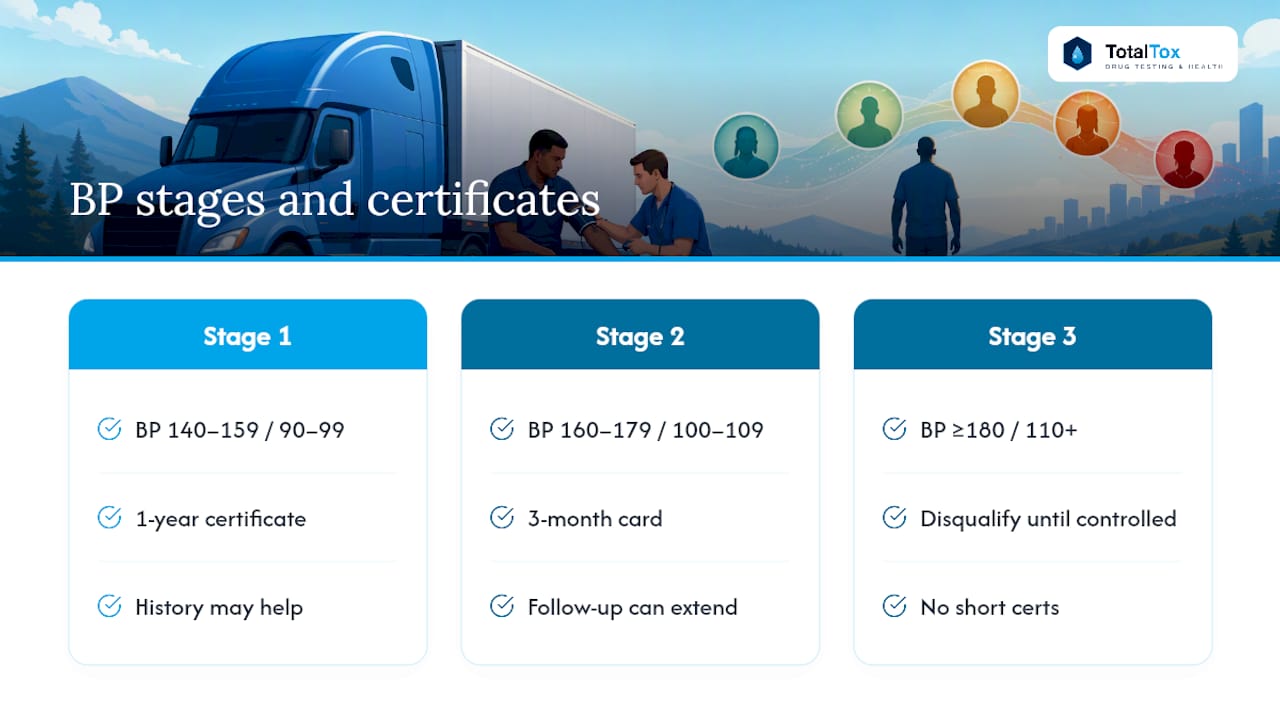
Your history matters here. A driver with a clean five-year track record who shows up with one elevated Stage 1 reading might get more benefit of the doubt than someone with a first-time exam and no baseline to compare against. Comorbidities, like diabetes or kidney disease, or symptoms like chest pain or vision changes, can push an examiner toward a shorter certification or a referral even within a stage that would otherwise qualify for the standard timeline.
To extend a short-term card into something longer, examiners commonly want a follow-up visit with improved readings, sometimes paired with a note from your treating physician confirming you’re responding to treatment. Without that paperwork, you’re stuck renewing the short card or risking disqualification at the next check.
Does blood pressure medication affect your DOT certification length?
Being on antihypertensive medication typically caps your certification at one year, even when your blood pressure reads perfectly controlled. The Medical Examiner’s Handbook treats medicated hypertension as a condition requiring ongoing monitoring, not a one-time pass.
Examiners commonly want a letter from your prescribing physician confirming the medication is working and not causing side effects that could impair driving, such as dizziness or fatigue. A log of recent home readings backs that up. If you’re also managing diabetes or renal disease alongside hypertension, expect tighter monitoring intervals and possibly more frequent documentation requests, since these conditions compound cardiovascular risk in ways examiners are trained to flag, as explained in detail by Heart disease risk higher among shift workers - John DeCosmo, D.O.
How can you prepare for better readings on exam day?
Some of what raises your blood pressure on exam day has nothing to do with your actual cardiovascular health, and a little preparation can prevent a borderline reading from becoming a real problem.
- Take your prescribed medication on schedule; don’t skip a dose thinking it’ll somehow help.
- Skip caffeine and nicotine for at least a few hours before the appointment.
- Arrive early enough to sit quietly for 5 to 10 minutes before your name is called.
- Keep your arm relaxed and supported at heart level during the reading, not braced or crossed.
- In the days before, cut back on sodium, stay hydrated, prioritize sleep, and get in some light exercise.
- Bring a printed or written log of recent home or pharmacy readings, plus a current medication list and any clinician notes.
Pro Tip: If your numbers run high mainly in medical settings, ask the examiner for a recheck after resting. A documented pattern of normal readings at home carries real weight, and a five-minute recheck sometimes changes the outcome entirely.
Total Tox walks drivers through this exact prep during scheduled DOT physicals, which cuts down on avoidable short-term cards caused by nothing more than exam-day stress.
What’s the path back to certification after a disqualifying reading?
Getting disqualified isn’t the end of your driving career, but it does mean work. The first move is seeing a doctor, starting or adjusting medication, and building a documented history of controlled readings over the following weeks. A single good reading rarely convinces an examiner; a pattern does.
If you were issued a 3-month card instead of an outright disqualification, that window is your chance to show improvement. Keep a consistent log, follow up with your primary care provider, and return with readings that clearly trend downward. A clearance letter from your physician or cardiologist, paired with MRO-reviewed documentation, tends to move things along faster than showing up with numbers alone and no paper trail. Examiners respond to evidence of sustained control, not a lucky day.
Total Tox perspective: what actually moves the needle on compliance
Most drivers treat the blood pressure check as an afterthought until it costs them a route. What we’ve seen matters more than the single number: a documented pattern beats a lucky reading every time, and drivers who show up with logs and med lists get faster, cleaner outcomes than those who don’t. Total Tox runs walk-in DOT physicals with MRO-reviewed results and audit-ready paperwork, which shortens the gap between a shaky first reading and a certificate you can actually use.
— Total Tox
Schedule a DOT physical or retest with fast, audit-ready results
Total Tox is the faster route to certification when a borderline reading or a short-term card is standing between you and your route. Instead of waiting days for lab results or scrambling to find an examiner who has openings, walk-in appointments at Total Tox typically get you tested and documented the same day, with results delivered within 24 hours and paperwork built to hold up under audit.
That speed matters most when you’re on a 3-month card and need a fast recheck, or when a fleet manager needs a driver back on the road without weeks of downtime. Total Tox’s DOT physical and compliance testing services cover the full exam, MRO review, and documentation drivers and employers need to move from a short-term certificate to a full one-year or two-year card. If you’re due for a physical, need a retest after a treatment adjustment, or manage a fleet that needs consistent compliance across multiple drivers, schedule a walk-in appointment and get it handled without the wait.