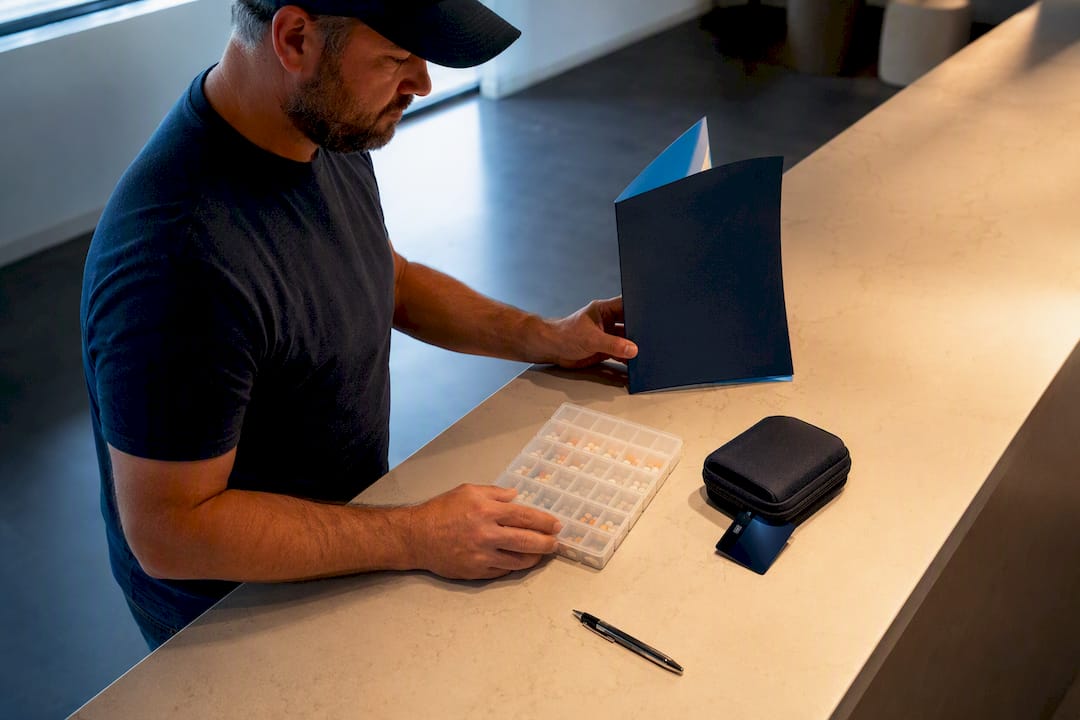
Bring a government photo ID and current CDL, a full medication list, and any corrective devices like glasses or hearing aids. Add recent blood pressure logs, CPAP compliance data, or HbA1c results if they apply to you. The single best move to avoid a shortened certificate: schedule with a medical examiner listed on the FMCSA National Registry and show up with your numbers already under control.
TL;DR:
- Drivers must bring a complete set of documents, including a current CDL, valid ID, medication list, and recent medical logs, to prevent delays.
- Proper preparation involves controlling blood pressure for months ahead, collecting CPAP compliance data, and ensuring diabetes documentation is current.
- Uncontrolled blood pressure exceeding 160/100 often results in shorter certificates, and missing sleep or diabetes records frequently cause disqualifications.
- Using a FMCSA-registered examiner and arriving with all necessary paperwork reduces the risk of being turned down or issued a shorter certification.
- Prioritize ongoing health management and documentation collection weeks before the exam to secure a full two-year DOT certificate.
Table of Contents
- The Complete DOT Physical Checklist: Documents, Devices, and Records
- What the DOT Medical Examiner Actually Checks
- How to Prepare in the 24 Hours Before Your Exam (And the Weeks Before That)
- Why Drivers Get Short Certificates or Fail Outright
- The FMCSA Forms Behind Your DOT Physical
- How Total Tox Supports Drivers Through the Process
- What Drivers Get Wrong About DOT Physical Prep
- Get Your DOT Physical Done Right the First Time
- Sources
The Complete DOT Physical Checklist: Documents, Devices, and Records
Nothing derails a DOT physical faster than showing up unprepared, and most delays trace back to missing paperwork rather than a failed test. Here’s what belongs in your folder before you walk through the clinic door.
Identification and driver credentials:
- A valid government-issued photo ID
- Your current CDL or learner’s permit
- Your previous DOT medical card, if you have one, so the examiner can compare history
Medications and supplements:
- A written list of every prescription, dosage, and schedule
- Over-the-counter drugs and supplements you take regularly, since some interact with conditions the examiner screens for
Corrective devices:
- Glasses or contacts (and a spare pair or solution if you wear contacts)
- Hearing aids, with fresh batteries, if you use them
Condition-specific medical records, only if they apply:
- Recent blood pressure logs from home monitoring
- A cardiology letter if you’ve had a heart event or procedure
- A recent HbA1c lab result if you have diabetes
- Seizure clearance paperwork if you have a seizure history
- CPAP compliance reports if you’ve been diagnosed with sleep apnea
On the practical side, expect a urine sample as part of the exam. This is a medical screening for specific gravity, protein, blood, and sugar, not the DOT drug test employers use for hiring or random testing. Drink normally beforehand, but don’t overdo fluids in the hour before your appointment. That can dilute the sample and force a retest.
Wear comfortable clothes since the exam involves some movement and range-of-motion checks, and arrive early rather than rushed. If your medications or history need clarification, have your primary care provider’s phone number handy.
Pro Tip: Keep a dedicated folder with copies of everything, not originals where possible. Clinics often keep documentation on file, and you don’t want your only HbA1c printout stuck in someone else’s paperwork.
What the DOT Medical Examiner Actually Checks
The exam moves through a fixed sequence, and every step ties back to a specific FMCSA standard.
- Health history review. The examiner asks about past surgeries, hospitalizations, chronic conditions, and current medications, cross-checking your answers against what you listed on your forms.
- Vision test. You need at least 20/40 acuity in each eye, with or without correction, plus a 70-degree horizontal field of vision. If you need glasses to hit that mark, expect a corrective-lens restriction on your certificate.
- Hearing test. You either pass a whisper test at five feet or an audiometric test showing no more than 40 dB average loss in your better ear.
- Blood pressure. The examiner typically has you sit for a few minutes before taking the reading, since a rushed check can trigger a false high number. This measurement directly determines how long your certification lasts.
- Urinalysis. A specific gravity, protein, blood, and sugar check, not a drug panel.
- Physical exam. The examiner checks your heart, lungs, abdomen, neurological function, and musculoskeletal system, recording everything on the Medical Examination Report Form MCSA-5875.
If you pass, the examiner issues Form MCSA-5876, your Medical Examiner’s Certificate, on the spot.
How to Prepare in the 24 Hours Before Your Exam (And the Weeks Before That)
The night before matters less than the weeks before, but both count.
In the 24 hours leading up to your appointment:
- Skip caffeine and nicotine for at least four hours beforehand, since both can spike blood pressure temporarily
- Take your prescribed medications on your normal schedule
- Avoid a heavy meal right before the exam
- Hydrate normally, but don’t chug water in the final hour
- Arrive 15 minutes early to fill out paperwork calmly instead of rushing
Weeks ahead, if blood pressure is a concern: start logging readings at home twice a day. If your numbers run high, see your primary care provider now, not the morning of your physical. A documented pattern of controlled readings gives the examiner something concrete to work from.
If you use a CPAP machine, pull 90 days of usage data from your device’s SD card or manufacturer app before your appointment. Examiners generally want to see at least an effective nightly use threshold consistent with compliance standards as evidence of real compliance, not just ownership of the machine.
If you have diabetes, get a current HbA1c lab result and, if you’re on insulin, a letter from your treating physician confirming stable control.
Pro Tip: Total Tox’s preparation checklist walks through this timeline in more depth if you want a printable version to work from.
Why Drivers Get Short Certificates or Fail Outright
Most disqualifications and short certificates trace back to a handful of repeat offenders, and nearly all of them are fixable.
- Uncontrolled blood pressure. Readings of 140-159/90-99 typically bring a one-year certificate instead of two; 160-179/100-109 often means a one-time 90-day card; anything at or above 180/110 usually disqualifies you until it’s under control. The fix is medical management and a follow-up visit with fresh readings, not arguing with the examiner.
- Missing CPAP compliance data. If you were diagnosed with sleep apnea and show up without usage reports, expect a delay while you gather them. Most sleep clinics or DME suppliers can print or email this data within a day.
- Thin diabetes documentation. A driver on insulin without a recent HbA1c or a physician’s letter is a common reason for a deferred decision.
- Medications that raise questions. Anything affecting alertness, coordination, or cardiovascular function may need a note from your prescribing doctor explaining dosage and monitoring.
- If you’re disqualified, you generally have the right to a second exam once the underlying issue is addressed, and in specific cases you can pursue a Skill Performance Evaluation certificate through FMCSA for certain physical limitations.
The FMCSA Forms Behind Your DOT Physical
Four forms govern the process, and knowing which one does what saves confusion at the clinic.
- MCSA-5875 (Medical Examination Report): You fill in your history and medications; the examiner records all measurements, test results, and body-system findings.
- MCSA-5876 (Medical Examiner’s Certificate): Issued after a passing exam, this is your actual DOT medical card, listing any restrictions like corrective lenses or hearing aids and your expiration date.
- MCSA-5871 (Vision Evaluation Report): Needed only when a specialist evaluation is required for borderline vision.
- MCSA-5870 (Insulin-Treated Diabetes Assessment): Required for drivers on insulin therapy seeking certification.
Confirm your examiner appears on the FMCSA National Registry before you book. An exam performed by someone off that list isn’t legally valid, no matter how thorough it was.
How Total Tox Supports Drivers Through the Process
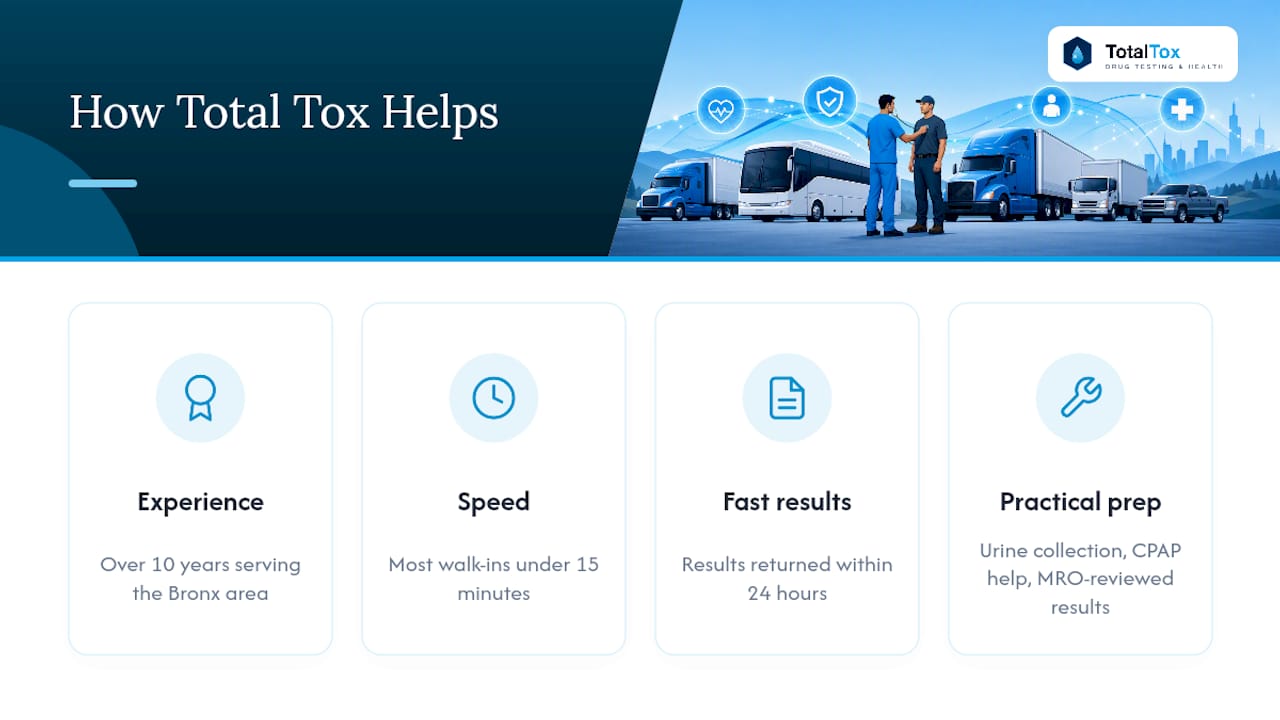
Total Tox handles the practical side of DOT physical prep that clinics often overlook. That includes urine collection handled correctly the first time, help interpreting CPAP export data before your appointment, and MRO-reviewed results that hold up under audit.
With over 10 years serving the Bronx area and thousands of tests completed annually, Total Tox built its reputation on speed without cutting corners: most walk-in visits take under 15 minutes, with results back within 24 hours. That turnaround matters when a missing document is the only thing standing between a driver and a full 24-month certificate. Fast documentation requests mean fewer days off the road waiting on paperwork.
What Drivers Get Wrong About DOT Physical Prep
Most drivers treat the DOT physical like a pass/fail event they can’t influence, when it’s closer to a documented conversation between you and the examiner. The paperwork you bring isn’t a formality. It’s the evidence that turns “borderline” into “certified for 24 months.”
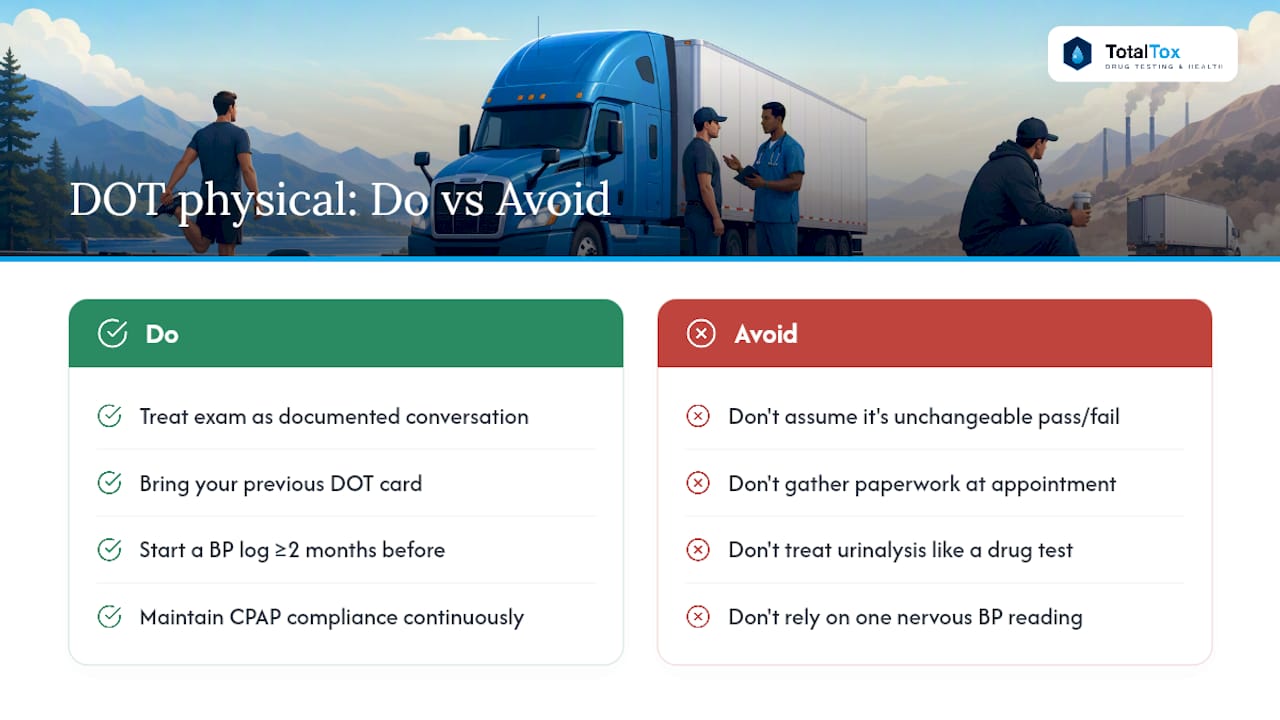
The conventional advice tells drivers to just show up and answer questions honestly. That’s necessary but incomplete. The drivers who consistently earn full-length certificates are the ones who treat blood pressure control and CPAP compliance as ongoing projects, not last-minute scrambles. A BP log started two months out carries more weight than a single good reading taken nervously in the exam chair.
What gets overrated: worrying about the urinalysis as if it’s a drug test in disguise. It isn’t. What gets underrated: the previous DOT card sitting in a glove compartment. Bringing it gives the examiner a baseline, and baselines shorten conversations. Prioritize your documentation before your appointment date, not during it.
— Total Tox
Get Your DOT Physical Done Right the First Time
A rushed or poorly documented DOT physical costs you more than a follow-up visit. It costs driving days. Total Tox runs walk-in DOT physicals and drug and alcohol testing built around getting drivers back on the road fast, with MRO-reviewed results and audit-ready documentation that hold up when a fleet safety officer or the FMCSA comes asking.
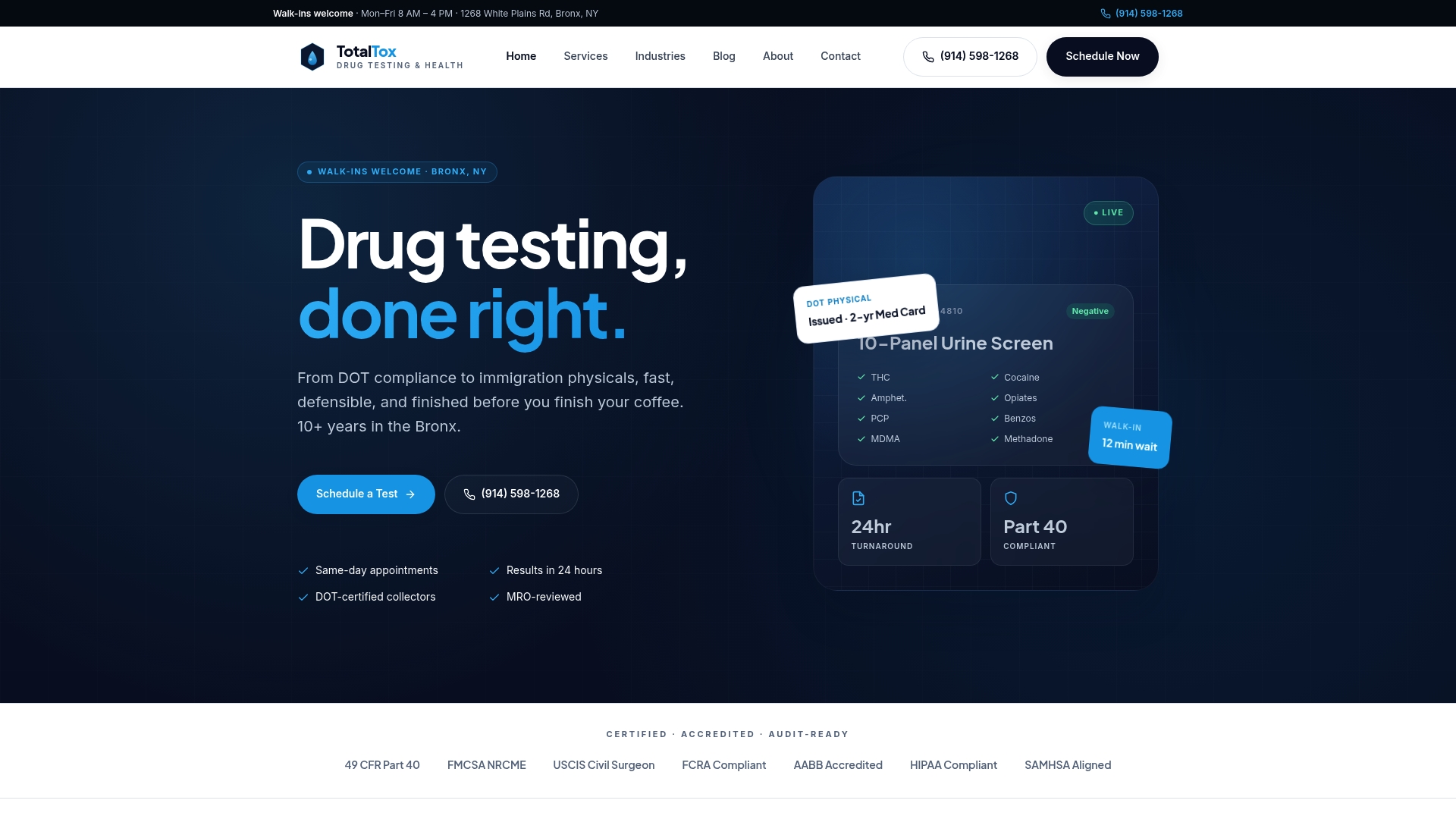
Whether you need CPAP data interpreted, a urine screen collected properly the first time, or a same-day physical before a load deadline, Total Tox’s services page lays out exactly what’s available and how quickly you can get in. Pricing is upfront before you sit down, and most visits move faster than a typical urgent care wait. Schedule your appointment or check walk-in availability today, bring the documents from this checklist, and leave with your certificate instead of a to-do list.
This article is general information, not a substitute for advice from a qualified doctor. Consult a qualified healthcare professional about your own circumstances before acting on anything here.