
A DOT physical is an FMCSA-specified exam that checks your vision, hearing, blood pressure, urine, and a full-body systems review; a certified National Registry examiner issues your Medical Examiner’s Certificate if you meet the standard. Most drivers who show up prepared, with a clean medication list and any relevant specialist notes, walk out certified for a typical certification period that can last up to two years.
TL;DR:
- Controlled hypertension and sleep apnea with documented management often result in shorter certificates rather than disqualification.
- Uncontrolled blood pressure over 140/90, untreated severe sleep apnea, or recent cardiac events usually require specialist clearance before certification.
- Bringing comprehensive health records, medication lists, and specialist notes can prevent delays or shorter certification periods.
- Only FMCSA-registered medical examiners can legally issue a DOT certificate, which is typically valid for up to two years.
- Examiners consider the full health picture, meaning multiple small issues combined can affect certification outcomes.
Table of Contents
- DOT Physical Requirements: What the Exam Actually Checks
- How DOT Physical Certification Actually Works
- What Disqualifies You From a DOT Physical
- How to Prepare for a DOT Physical
- What Happens After Your DOT Physical
- How a DOT-Focused Clinic Speeds Up Certification
- Author Perspective: What Actually Matters on Exam Day
- Walk-In DOT Physicals Without the Wait
- Sources
- FAQ
DOT Physical Requirements: What the Exam Actually Checks
Every DOT physical follows the same core script, whether you’re getting it done for a new CDL or a routine renewal. The examiner works through a fixed set of tests laid out on the Medical Examination Report Form (MCSA-5875), and each one has a numerical pass line. Here’s what gets measured and what “passing” actually looks like.
- Vision: You need at least 20/40 acuity in each eye, with or without corrective lenses, plus a horizontal field of vision of at least 70 degrees in each eye. Wear your glasses or contacts to the appointment. If you need them to hit 20/40, that gets noted directly on your Medical Examiner’s Certificate as a driving restriction.
- Hearing: You pass by perceiving a forced whisper from 5 feet away in at least one ear, or by scoring an average hearing loss of 40 decibels or less in your better ear on an audiometric test. Hearing aids are allowed and get documented on the form.
- Blood pressure: The examiner records a sitting blood pressure reading, sometimes taking a second reading if the first looks borderline. Numbers under 140/90 typically clear you for the certificate without a second look, with certification duration determined by the medical examiner.
- Urinalysis: This isn’t a drug screen. It’s a dipstick check for specific gravity, protein, blood, and sugar, meant to catch signs of kidney disease, diabetes, or other conditions that could affect your fitness to drive. Abnormal protein, blood, or sugar readings can trigger a request for follow-up labs before certification.
- Physical exam: The examiner walks through 13 body systems: general appearance, eyes, ears/nose/throat/mouth, heart, lungs and chest, abdomen, vascular system, genito-urinary, extremities, spine and musculoskeletal, neurological function, and gait. Anything abnormal gets a written note and sometimes a request for a specialist letter before the examiner will sign off.
None of these standards exist in isolation. A slightly elevated blood pressure reading combined with a gait abnormality tells a different story than either one alone, which is exactly why examiners are trained to look at the whole picture instead of grading items separately.
How DOT Physical Certification Actually Works
Two forms drive the entire process, and understanding what they do removes most of the mystery around DOT physical paperwork. The examiner fills out the Medical Examination Report (MER, Form MCSA-5875) during your exam, documenting every test result, your health history answers, and notes on any of the 13 body systems. That form stays with the examiner or clinic.
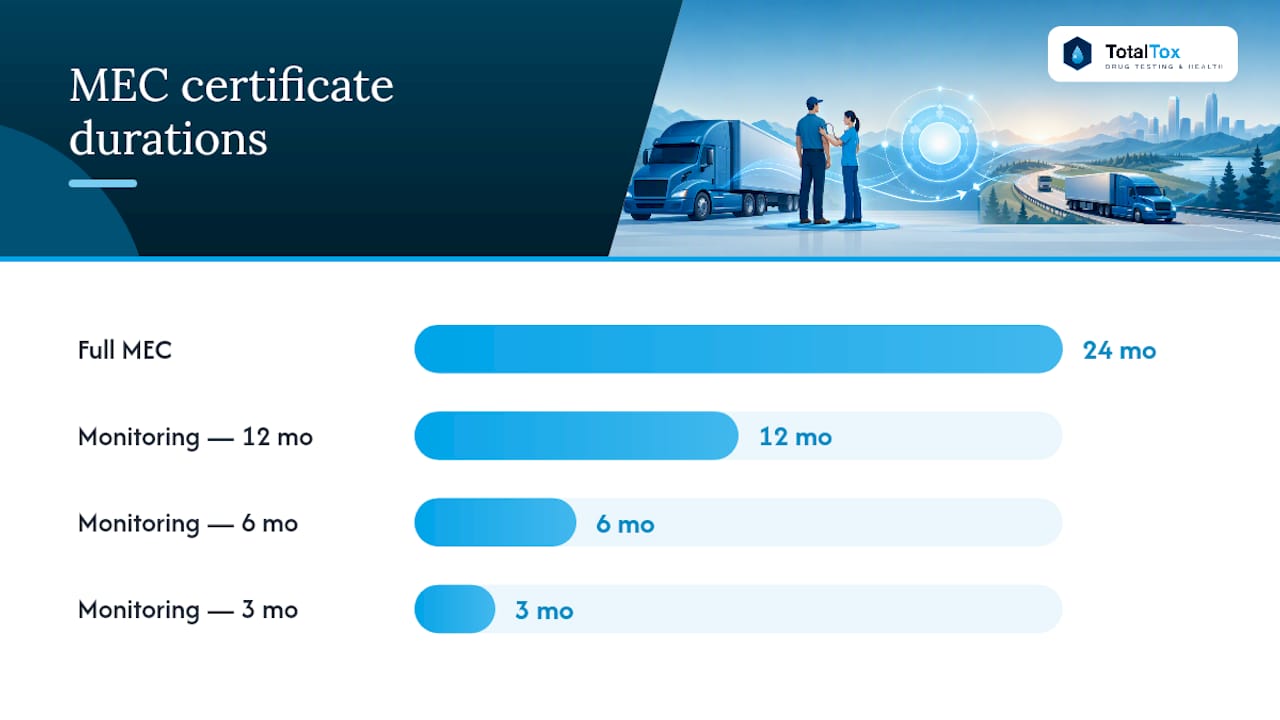
Based on the MER, the examiner completes the Medical Examiner’s Certificate (MEC, Form MCSA-5876), which is the actual card you carry. It lands in one of four outcomes: you meet the standards outright, you meet them with a monitoring requirement (a shorter certificate, often 3, 6, or 12 months), your determination is pending further documentation, or you don’t currently meet the standards.
A few things worth knowing about who can perform this exam and how your status gets verified:
- Only examiners listed on the FMCSA National Registry of Certified Medical Examiners can legally issue a DOT medical certificate.
- Registry-listed examiners include physicians, physician assistants, nurse practitioners, and doctors of chiropractic, provided each has completed FMCSA training and certification.
- A qualifying MEC is typically valid for a period that can last up to two years, though examiners can shorten that window for monitoring purposes.
- States and carriers confirm your status through electronic posting and the Commercial Driver’s License Information System, so you’re responsible for making sure your new MEC reaches your state licensing agency.
What Disqualifies You From a DOT Physical
Not every red flag on the form carries the same weight. Some conditions are absolute disqualifiers under federal standards, meaning no amount of documentation changes the outcome. Epilepsy with a recent seizure history is one example. Most other conditions fall into a gray zone where the examiner has real discretion, and your paperwork determines whether you get a full card, a short card, or a denial.
- Uncontrolled hypertension is one of the most common reasons drivers get a short certificate instead of a two-year one. Severe, untreated high blood pressure can disqualify you outright, but well-managed hypertension with a recent physician note usually results in a monitored certificate rather than a denial.
- Insulin-treated diabetes used to be an automatic disqualifier. It isn’t anymore, but drivers need an endocrinologist’s evaluation and stable glucose control documented before an examiner will certify them.
- Untreated severe sleep apnea raises concerns about fatigue-related crash risk. A driver using a CPAP machine with a documented compliance report generally has no trouble getting certified.
- Uncontrolled cardiac or neurological conditions, including recent cardiac events without cardiology clearance or unmanaged seizure disorders, typically require specialist sign-off before an examiner will move forward.
If you don’t meet the standard, 49 CFR part 381 allows exemption and variance requests for several conditions, and drivers with limb impairments can apply for a Skill Performance Evaluation certificate instead. Both routes require specific medical documentation, so talk to your examiner about which path applies before you leave the clinic.
How to Prepare for a DOT Physical
Good preparation is the single biggest factor in whether you walk out with a full 24-month certificate or a shorter one that requires a recheck. Bring a valid photo ID, your current MEC if you have one, and a complete medication list with dosages and prescriber contact information. If you’re being treated for sleep apnea, hypertension, or a cardiac condition, bring the specialist notes, CPAP compliance report, or recent blood pressure logs that show the condition is under control.
- Bring your glasses, contacts, or hearing aids to the appointment, since the exam tests your corrected vision and hearing, not your uncorrected baseline.
- Skip caffeine and nicotine for at least 30 minutes before your blood pressure check, since both can temporarily spike your reading.
- Arrive rested. A stressful drive to the clinic can push your blood pressure into recheck territory for no reason connected to your actual health.
- Confirm your employer’s reimbursement policy before booking, since federal rules don’t require employers to cover the cost, though many do.
Pro Tip: Keep one printed sheet with your medications, dosages, and prescriber names ready before you walk in. Inconsistencies between what you tell the examiner and what your health history form says are one of the most common reasons drivers get flagged for a “determination pending” instead of an immediate certificate.
Exams typically run 30 to 60 minutes, and pricing generally falls in the $50 to $200 range depending on the clinic and whether paperwork handling is included. Ask upfront whether the fee covers form submission, since some clinics charge separately for that.
What Happens After Your DOT Physical
If you qualify outright, the examiner issues your MEC on the spot, generally valid for up to two years, and you or the clinic forward it to your state licensing agency for the record to update.
- Monitoring or pending status: If your determination is marked pending, the examiner generally has up to a 45-day window to receive follow-up documentation, such as a specialist letter or updated labs, before a final call gets made.
- Short-duration certificates: Conditions like hypertension or sleep apnea often result in a 3, 6, or 12-month card instead of a denial, with a recheck required to confirm the condition remains controlled.
- Not qualified: If you don’t meet the standard, your next move is either treating the underlying condition and reapplying, or pursuing an exemption under 49 CFR part 381 if your condition qualifies.
How a DOT-Focused Clinic Speeds Up Certification
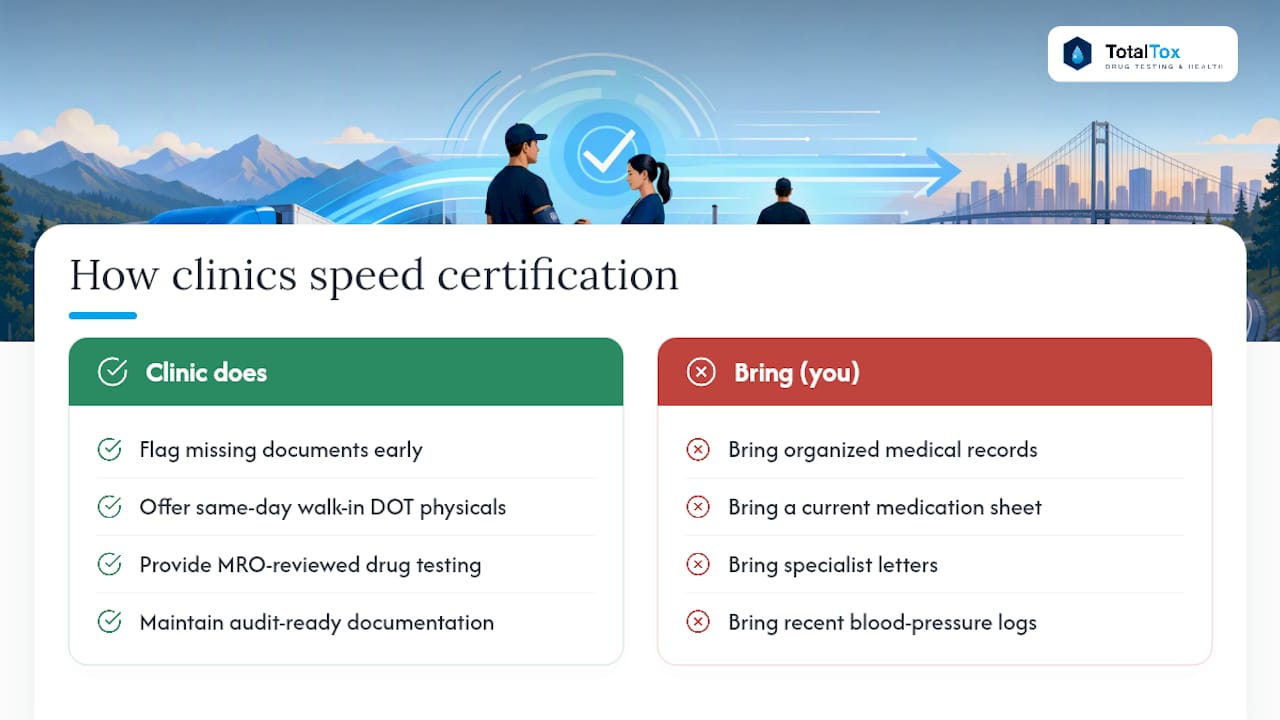
An experienced clinic does more than run the tests. Staff who handle DOT paperwork daily know exactly which specialist notes an examiner will want for hypertension, sleep apnea, or diabetes, and they can flag missing documentation before it turns into a pending status or a short card.
Certain clinics handle walk-in DOT physicals alongside separate MRO-reviewed drug testing when employers require it, with audit-ready documentation and same-day appointments available. Bringing organized records, your medication sheet, specialist letters, recent BP logs, cuts down on rechecks and gets you a full-duration certificate faster.
Author Perspective: What Actually Matters on Exam Day
The DOT physical exists to certify that you’re medically fit to operate a commercial vehicle safely, not to trip you up on a technicality. Organized records prevent most delays we see. Coordinate with your primary doctor before the appointment if you’re managing a chronic condition, since that documentation carries real weight with a registry examiner. And always confirm your employer’s paperwork and reimbursement policy before you book.
— Total Tox
Walk-In DOT Physicals Without the Wait
Some clinics provide a faster route to DOT certification for drivers who can’t afford to lose a shift sitting in a waiting room. A walk-in model can get you through vision, hearing, blood pressure, urinalysis, and the full systems check without an appointment slot booked days out, and if your employer requires separate drug testing, MRO-reviewed results and audit-ready documentation can help keep everything compliant on the first try.
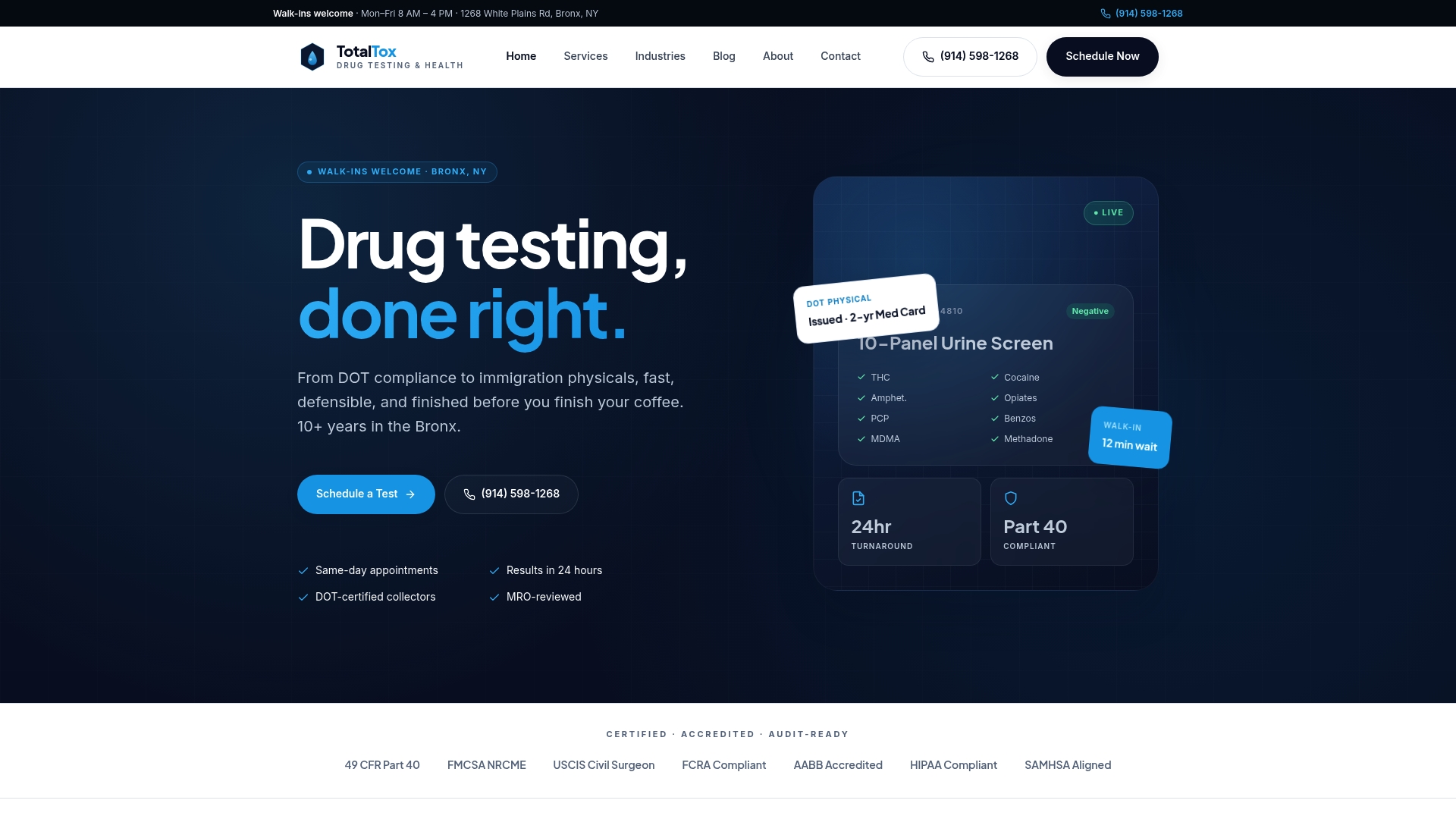
If you’ve been putting off a renewal because you’re not sure your paperwork is in order, bring what you have. Our staff handles MER and MEC submission directly, so you’re not left guessing whether your certificate made it to the right place. Visit our DOT physicals and drug testing services page to see what’s included, or contact us to schedule your walk-in exam today.
Sources
For direct access to the forms and standards referenced throughout this guide, consult the FMCSA National Registry, the MER Form MCSA-5875 PDF, the DOT medical exam and certification overview, and the Medical Examiners Handbook (2024 edition). Drivers wanting to understand how DOT drug testing differs from the physical’s urinalysis component can also review this explainer on DOT versus non-DOT drug tests.
This article is general information, not a substitute for advice from a qualified doctor. Consult a qualified healthcare professional about your own circumstances before acting on anything here.
- FMCSA — National Registry of Certified Medical Examiners
- FMCSA — Medical Examination Report Form (MCSA-5875) PDF
FAQ
What will disqualify you on a DOT physical?
Absolute disqualifiers include conditions like recent uncontrolled epilepsy, while others such as severe untreated hypertension, insulin-treated diabetes without proper documentation, or untreated severe sleep apnea often lead to a denial unless a specialist confirms the condition is controlled.
What line on the eye chart do you need to pass a DOT physical?
You need at least 20/40 visual acuity in each eye, with or without corrective lenses, along with a minimum 70-degree horizontal field of vision in each eye.
Do you lose your CDL if you don’t get a DOT physical?
Your CDL itself isn’t automatically revoked, but your medical certification lapses, and driving commercially without a current Medical Examiner’s Certificate puts you out of compliance and unable to legally operate a commercial vehicle.
How long does a DOT physical certificate last?
A qualifying Medical Examiner’s Certificate is typically valid for up to 24 months, though examiners can issue shorter certificates, often 3, 6, or 12 months, when a condition requires ongoing monitoring.
How much does a DOT physical cost?
Pricing generally falls in the $50 to $200 range depending on the clinic and services included; check providers’ sites for current pricing on walk-in exams.