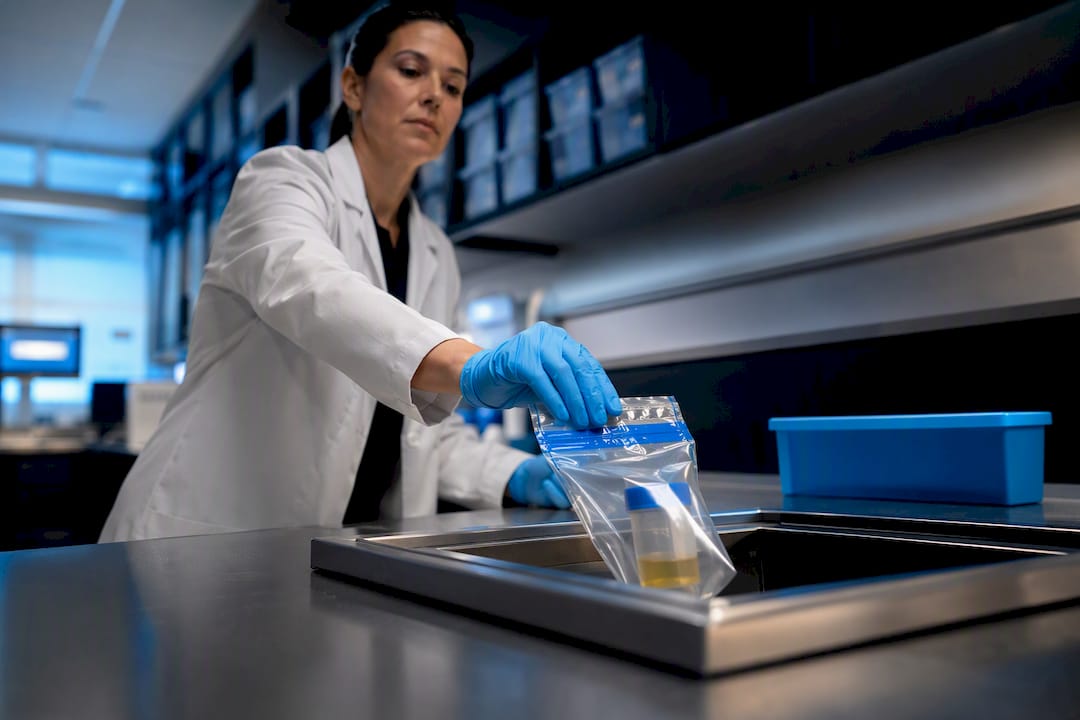
Most negative drug test results come back within 24 to 48 hours for lab-based testing, and often within minutes for on-site screens. Confirmed positive results take longer, typically 3 to 7 business days, because a preliminary non-negative must go through confirmatory lab testing and Medical Review Officer review before it’s final. Results are typically reported within 24 hours of collection.
TL;DR:
- Negative on-site urine or oral fluid tests deliver results within minutes, while positive results require up to a week for confirmatory lab testing and review.
- Hair follicle tests can detect drug use going back about 90 days, but lab processing usually takes 2 to 5 business days, affecting screening choices.
- Confirmed positive results often involve delay due to confirmatory testing with GC-MS or LC-MS/MS and additional review by a Medical Review Officer, which can add several days.
- Results are typically released to employers first, with individuals needing to contact clinics or MROs directly, and providing prescription documentation can speed the process.
- Using providers that run same-day courier pickups and checking if labs offer direct secure portals can significantly reduce testing turnaround times.
Table of Contents
- How Long Do Drug Test Results Take By Test Type?
- Why Do Some Drug Test Results Take Longer?
- What Happens After a Non-Negative Result?
- How Do You Check Your Drug Test Results?
- How Do Providers Speed Up Drug Test Turnaround?
- Do Privacy Laws Affect When You Get Your Drug Test Results?
- Total Tox’s Take: Build In a Buffer, Don’t Just Hope
- Fast, Compliant Testing When Your Timeline Can’t Slip
- Sources
How Long Do Drug Test Results Take By Test Type?
The clock starts the moment the sample leaves your hands, but how long you wait depends almost entirely on which test you took and where it gets analyzed.
On-site rapid urine and oral fluid screens are the fastest option on the table. A negative reading shows up in minutes, right there at the collection site, because the immunoassay strip does its job on the spot. The catch: any screen that flags non-negative can’t be reported as final. It has to go to a lab for confirmation, no exceptions, regardless of how confident the on-site reading looked.
Here’s how the major test types typically break down for negative results:
- On-site urine or oral fluid: minutes to same-day
- Lab-based urine: 1 to 3 business days
- Blood: roughly 1 to 2 business days
- Hair follicle: 2 to 5 business days
- Mail-in at-home kits: 3 to 7 business days after the lab receives the sample
Turnaround time and detection window are two different clocks, and mixing them up causes a lot of confusion. Turnaround is how long the lab takes to process your sample. Detection window is how far back the test can see into your system. Hair testing can detect drug use going back roughly 90 days, which is why it’s often used for pre-employment screening in safety-sensitive roles, even though the lab itself doesn’t take three months to run the test. Saliva and blood, by contrast, have much shorter windows into the past but don’t take any longer to process.
DOT-regulated and other safety-sensitive tests usually get routed through dedicated MRO review tracks, which can actually move faster than general workplace testing because the lab and MRO already know the reporting deadlines are non-negotiable. If you’re comparing hair versus urine for a specific job requirement, the hair follicle versus urine comparison breaks down which one your employer is more likely to require and why.
Why Do Some Drug Test Results Take Longer?
A positive on-site screen isn’t the end of the story. It’s the start of a multi-step process.
- Immunoassay screening flags a sample as non-negative. This is fast but not specific enough to stand alone.
- Confirmatory testing using GC-MS or LC-MS/MS isolates and measures the exact compound. This is the step that separates a rumor from a fact, and it takes real lab time, often a full business day or more on its own.
- MRO review follows. A Medical Review Officer contacts the individual to rule out legitimate explanations, like a valid prescription, before the result becomes final.
Shipping adds its own delay. Samples collected at a walk-in clinic often travel to a centralized lab, and weather, courier schedules, or a lab running at peak volume can tack on another day. An invalid or diluted sample sometimes forces a full re-collection, resetting the clock entirely.
Pro Tip: Bring your current prescriptions and a doctor’s note to your collection appointment. Having documentation ready before the MRO calls can cut days off the review, since the MRO won’t need to track you down and wait for records.
What Happens After a Non-Negative Result?
A preliminary non-negative is not a confirmed positive. It’s a screening flag that has to clear confirmatory testing before it means anything official, and that distinction changes the entire timeline.
- Negative results move fast because there’s no confirmation step needed. They typically land in 24 to 48 hours.
- Non-negative results require GC-MS or LC-MS/MS confirmation plus MRO review, which stretches the wait to several extra business days.
- The lab usually notifies the employer or third-party administrator first, while the MRO contacts the individual directly to discuss the result.
If you’re the one being tested, you generally have options once contacted: provide prescription documentation, request a retest of the split specimen, or raise a chain-of-custody concern if something about the collection seemed off. None of that happens overnight, which is exactly why non-negative results take longer than clean ones.
How Do You Check Your Drug Test Results?
Who you contact depends on why you took the test in the first place.
- Job applicants usually hear from HR, a staffing agency, or a third-party administrator managing the employer’s program.
- Current employees in DOT or safety-sensitive roles often get notified through a compliance portal or directly by the MRO if the result is non-negative.
- Self-pay individuals can typically call the testing clinic directly or check a secure lab portal.
Before you call anyone, have your collection ID, the date and location of your test, a photo ID, and your employer’s name ready. It speeds up the lookup considerably. If you’re past the expected window with no word, contact the clinic or MRO office first, not the lab directly. Labs rarely release results to individuals without going through the ordering party, and knowing that saves you a wasted call.
How Do Providers Speed Up Drug Test Turnaround?
Speed without cutting corners comes down to logistics, not shortcuts. A provider that runs same-day courier pickups to a partner lab, rather than batching samples for a weekly pickup, shaves a full day or more off reporting on its own.
Ask any provider these questions before you commit:
- Does the MRO review non-negative results the same day the lab reports them, or does it sit in a queue?
- Can the employer or individual check a secure lab portal directly instead of waiting on a phone call?
- Is there a documented service level for reporting time, or is “fast” just a marketing word?
SAMHSA’s guidance on substance use screening underscores why consistent, documented workflows matter for both accuracy and speed. This clinic uses a walk-in model with same-day sample processing and MRO-reviewed reporting built specifically to serve DOT and workplace compliance needs where a slow turnaround creates real downtime for an employer.
Do Privacy Laws Affect When You Get Your Drug Test Results?
Federal and state privacy rules shape who sees your result and when, and that’s often a bigger factor in perceived delay than the lab itself. Under most workplace testing programs, results flow through the MRO first, not straight to your supervisor. That’s a deliberate legal safeguard, not an accident, and it means a non-negative result sits with the MRO until a medical review is complete, even if the lab already finished its work.
DOT-regulated testing follows federal confidentiality rules that require MRO involvement before any non-negative result reaches an employer. This protects employees with legitimate prescriptions from an unfair adverse action, but it also means the MRO step is not something a clinic can skip to save time, regardless of how badly an employer wants an answer.
State laws add another layer. Some states restrict how long an employer can retain test records or who within a company can access results, which occasionally means a company’s own HR process, not the lab, is the slower link. If you’re an applicant wondering why your employer hasn’t shared a result yet, it’s worth asking whether the delay is medical review, lab logistics, or an internal HR hold before assuming something went wrong with the sample.
Chain-of-custody documentation also plays a quiet role in timing; proper specimen collection procedures ensure samples are handled correctly throughout the testing process. Every step, from collection to shipping to lab receipt, gets logged specifically so results hold up if a legal challenge ever arises. That paperwork isn’t bureaucratic overhead. It’s what makes a result defensible in an unemployment hearing or a workers’ comp dispute months later.
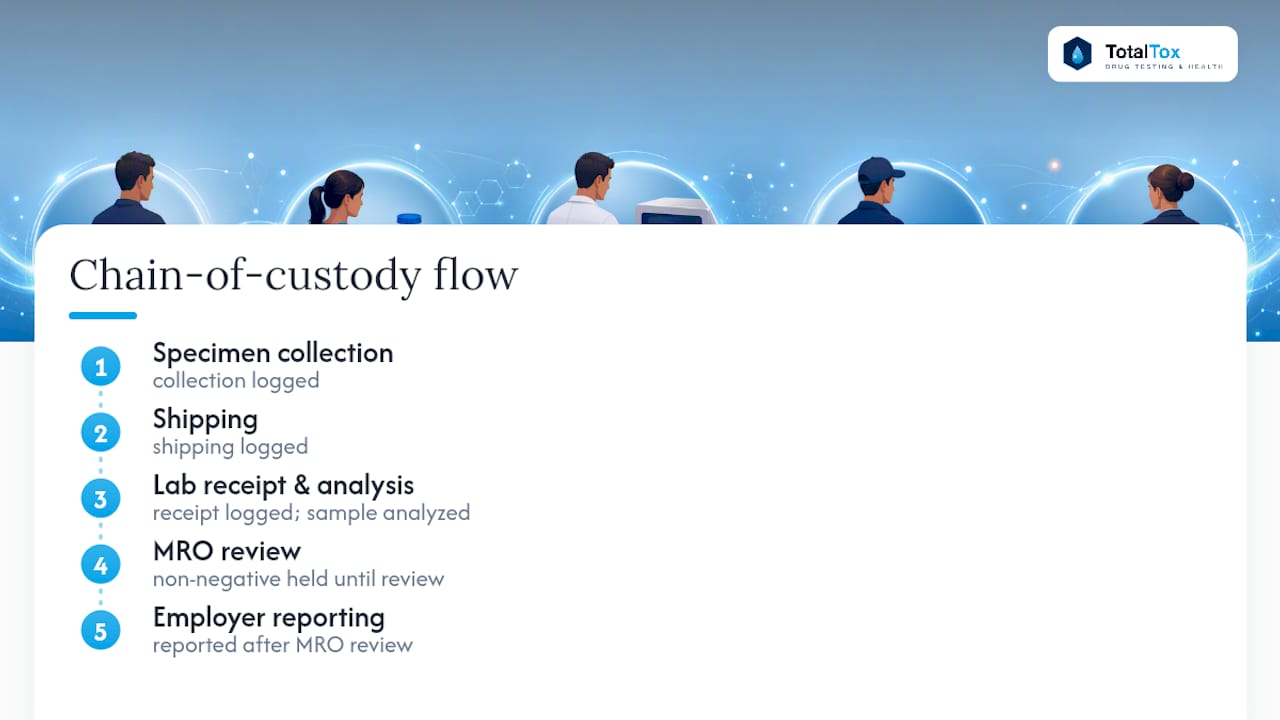
Total Tox’s Take: Build In a Buffer, Don’t Just Hope
Plan for 3 to 5 business days on lab-based urine testing, longer if hair testing or confirmatory review enters the picture. Employers should set that expectation with candidates up front and collect prescription documentation before testing day, not after a non-negative flag forces a scramble. Candidates should bring ID and any relevant prescriptions to the appointment and ask directly whether the clinic offers lab portal access. That one question can shave real time off an MRO cycle.
— Total Tox
Fast, Compliant Testing When Your Timeline Can’t Slip
When a hiring deadline or DOT compliance window is on the line, waiting on results is the last thing you need. The service is built for exactly that pressure: walk-in testing with no appointment required, results processed same-day in most cases, and every non-negative result routed through MRO review so the paperwork holds up if anyone ever questions it.
Total Tox’s drug testing, DOT physicals, and occupational health services cover urine, saliva, and hair testing, immigration medical exams, and MRO-reviewed reporting built for employers who can’t afford a compliance gap. Bring a photo ID and any current prescriptions to speed up review if a screen comes back non-negative. Staffing agencies and construction, transportation, and healthcare employers can also check industries served to see testing programs built around their specific compliance requirements.
Ready to schedule? Contact Total Tox to book a walk-in appointment or set up an employer testing account today.
Sources
- Clinical/forensic literature on drug testing workflows (PubMed)
- Drug testing overview — Cleveland Clinic
- Peer-reviewed review on drug testing and detection windows (NCBI PMC6368048)
- SAMHSA (substance use resources)