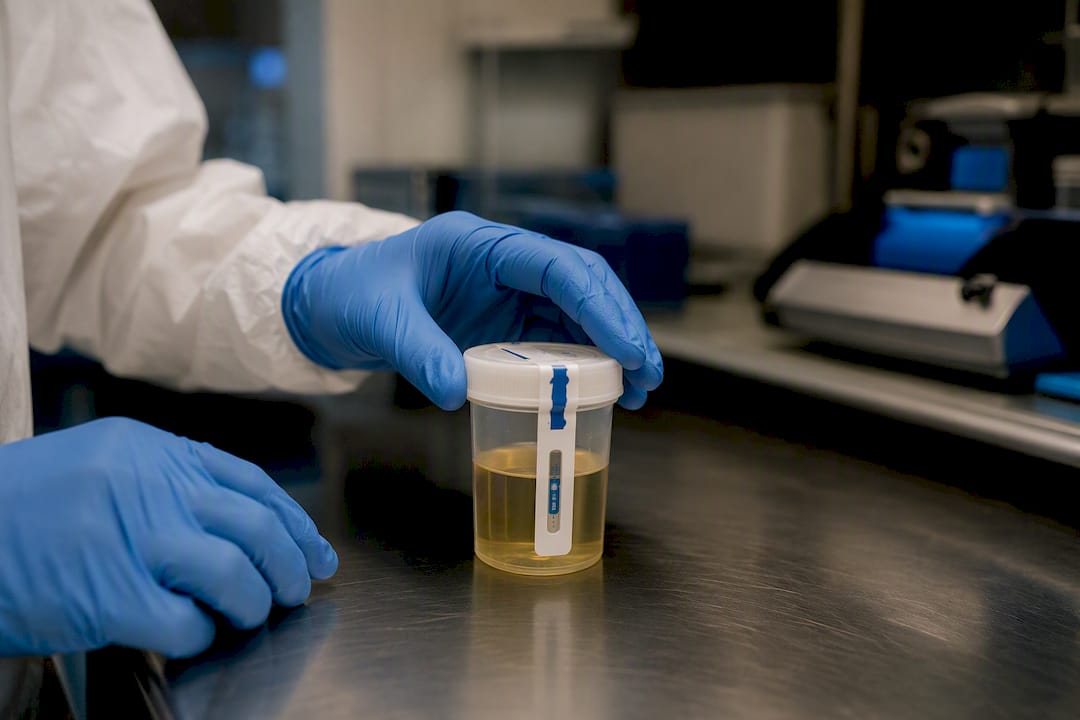
An EtG urine test detects ethyl glucuronide, a metabolite your body makes only after alcohol exposure, and it typically flags drinking up to several days back depending on the amount consumed and the lab’s cutoff. Because EtG testing is sensitive enough to pick up trace exposure, a positive result should get confirmed by LC-MS/MS lab analysis rather than treated as automatic proof of drinking. Context always matters here.
TL;DR:
- Urine EtG testing can detect alcohol use up to 48 to 90 hours after drinking, with heavy or repeated intake extending this window.
- Low cutoff levels like 100 ng/mL may produce false positives from incidental exposure to mouthwash or sanitizer, while higher cutoffs better indicate substantial drinking.
- Confirmatory lab analysis with LC-MS/MS is essential for reliable results, especially when testing impacts legal or employment decisions.
- Factors like hydration, metabolism, and individual body processing can cause variability, making single test results insufficient for definitive conclusions.
- Using home test strips provides quick answers but lacks the validation and chain-of-custody precautions necessary for any legally or professionally binding purpose.
Table of Contents
- What Is an EtG Alcohol Test and Why Urine?
- How Long Does an EtG Test Detect Alcohol?
- What Do EtG Cutoff Levels Mean for Your Results?
- Is an EtG Test Accurate Enough to Rely On?
- What Causes False Positives on an EtG Test?
- Where Can You Get an EtG Test or Buy Strips?
- How Should Samples Be Collected to Avoid Contamination?
- Why Do Chronic and Occasional Drinkers Interpret Differently?
- Do Hydration and Metabolism Change Your Results?
- What’s New in EtG Testing Technology?
- How Total Tox Handles EtG Testing and Client Guidance
- Ready to Schedule Your EtG Test?
- A Straight Answer on What EtG Testing Can and Can’t Tell You
- Sources
What Is an EtG Alcohol Test and Why Urine?
Ethyl glucuronide forms when your liver processes ethanol through a pathway called glucuronidation, attaching a glucuronic acid molecule to a small fraction of the alcohol you drink. Unlike breath tests, which measure active blood alcohol in real time, EtG is a direct biomarker that lingers in your system long after you’re sober and no longer feel any effects.
Labs use urine for a simple reason: it’s noninvasive, cheap to collect, and holds EtG at concentrations higher than blood. That makes it the workhorse matrix for treatment programs, probation monitoring, and workplace abstinence checks.
Other matrices exist, each with tradeoffs:
- Blood shows very recent exposure but clears fast, making it impractical for monitoring days-old drinking.
- Hair can reveal alcohol use going back weeks or months, useful for long-term monitoring comparisons, but it can’t pinpoint a specific drinking episode.
- Nails behave similarly to hair, offering a longer look-back window at the cost of precision.
Urine sits in the middle: recent enough to matter, long enough to catch.
How Long Does an EtG Test Detect Alcohol?
Peer-reviewed detection windows for urine EtG commonly fall between roughly 48 and 90 hours after drinking, though some methods and heavier drinking episodes push detectability closer to 120 hours. Mayo Clinic Laboratories notes that with certain cutoffs, EtG and its related marker EtS can still show up after five days.
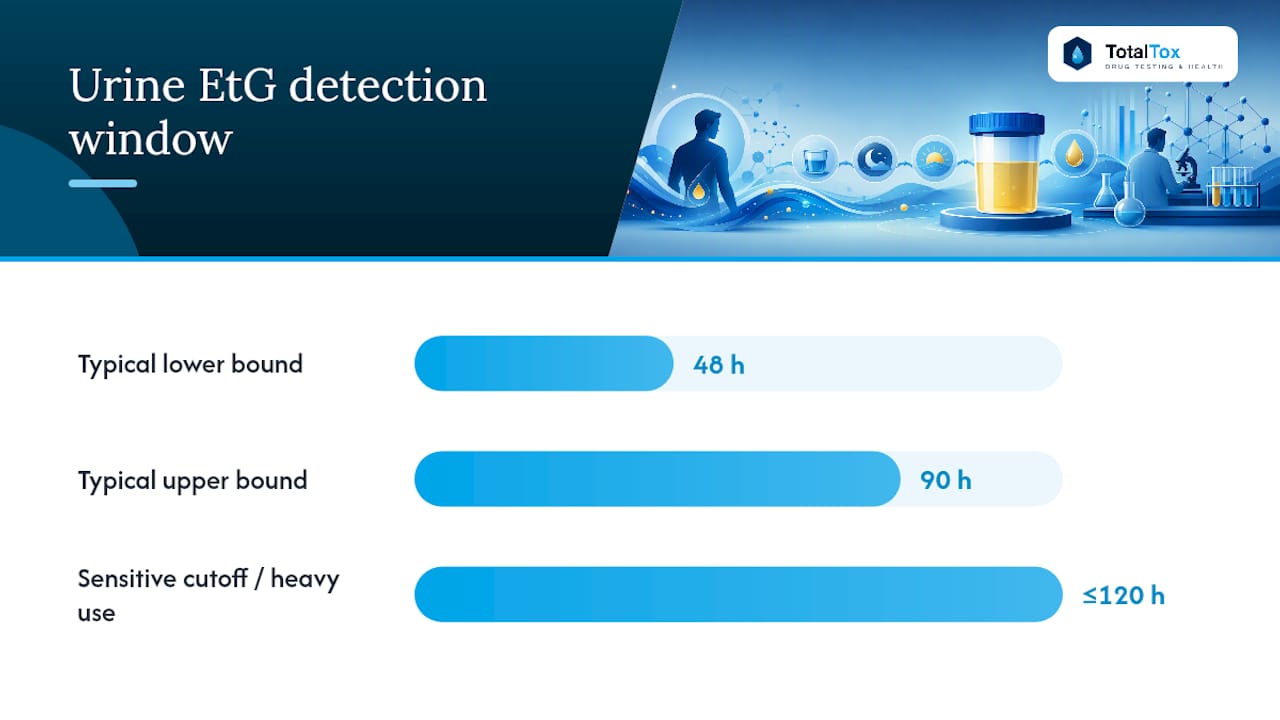
The detection window isn’t fixed. It moves based on how much you drank and how your body handles it.
Several factors stretch the window out:
- A larger volume of alcohol consumed in one sitting
- Repeated or heavy drinking over consecutive days
- Slower personal metabolism
- Reduced kidney function, since EtG clears through renal filtration
Other factors shrink it:
- A single small drink
- Fast metabolism
- High fluid intake and frequent urination
None of these guarantee a negative result, though. Someone who had one glass of wine two days ago might test negative, or might not, depending on hydration, timing of the last urination, and individual enzyme activity. That variability is exactly why detection windows get reported as ranges instead of a single number.
What Do EtG Cutoff Levels Mean for Your Results?
Screening immunoassays are the first pass. They’re fast and cheap, but they flag EtG at low concentrations without confirming the source, so a positive screen isn’t the final word. Labs confirm true positives using LC-MS/MS, the gold-standard analytical method that separates and identifies EtG molecules with far greater specificity than a screening strip.
Cutoff thresholds change what a “positive” actually means:
- 100 ng/mL — a low cutoff, sensitive enough to catch incidental exposure from mouthwash or hand sanitizer, not just drinking.
- 250 ng/mL — a moderate cutoff, often used to reduce false positives while still catching light to moderate drinking.
- 500 ng/mL — a higher cutoff, generally associated with more substantial or recent alcohol consumption.
Labs frequently measure ethyl sulfate (EtS) alongside EtG. EtS has a shorter detection window and helps confirm the timing and source of exposure, which is part of why reference labs pair EtG with EtS rather than reporting EtG alone. A low positive near the cutoff deserves more scrutiny than a result far above it.
Is an EtG Test Accurate Enough to Rely On?
EtG’s biggest strength is also its biggest limitation: it’s extremely sensitive, which means it can’t reliably tell the difference between someone who drank a beer and someone who used an alcohol-based hand sanitizer a few dozen times in one day. That sensitivity is why SAMHSA has cautioned that EtG results are not scientifically supportable as the sole basis for legal or disciplinary action.
Results near the cutoff threshold shouldn’t drive high-stakes decisions on their own. Confirmatory testing with LC-MS/MS, combined with a full clinical picture, gives a far more reliable read than a single number on a lab report.
Clinicians and monitoring programs that use EtG well treat it as one data point, not a verdict. Repeat testing over time, EtS measurement, and a conversation about recent product exposure all add context a single urine sample can’t provide on its own.
Pro Tip: If a result is going to affect your job, a legal case, or a monitoring program, ask specifically whether the lab ran confirmatory LC-MS/MS testing. A screening-only result carries much less weight and should never be the final answer.
What Causes False Positives on an EtG Test?
Incidental exposure is the single biggest wrinkle in EtG testing, and it comes from more sources than most people expect.
- Mouthwash and oral rinses containing ethanol, especially with repeated use over a short period.
- Hand sanitizers, particularly gel formulas used frequently throughout a day.
- Topical products like some cosmetics, aftershaves, and antiseptic wipes.
- Certain foods, including dishes cooked with wine or extracts, and some fermented items like kombucha or vinegar-heavy dressings.
- Cough syrups and other liquid medicines that carry small amounts of ethanol as a solvent.
Timing matters as much as the source. A single swipe of hand sanitizer probably won’t register, but using it a dozen times across a workday adds up. Product alcohol concentration and how close to the test the exposure happened both shift the odds of a positive.
If you know you’ve been exposed to any of these, document it before testing. Request EtS measurement alongside EtG, and when the result carries real consequences, insist on chain-of-custody procedures and lab confirmation rather than a screening cup alone.
Where Can You Get an EtG Test or Buy Strips?
Your choice comes down to what the result needs to accomplish. Formal, legally defensible results require a lab. Personal peace of mind doesn’t.
- Lab-based testing with LC-MS/MS confirmation is required for occupational, legal, and monitoring-program use, and it’s the only route that supports proper chain-of-custody documentation.
- Home EtG test strips are sold for private screening, with some retail listings advertising detection windows of roughly 24 to 80 hours. They’re convenient but nowhere near as definitive as a confirmed lab result, and they carry no documentation value.
- Turnaround and cost differ sharply too: strips give an answer in minutes for a few dollars, while confirmatory lab testing takes longer but produces a result someone else can actually rely on.
If a probation officer, employer, or treatment program needs proof, skip the strip and go straight to a lab that can confirm results and document the chain of custody.
How Should Samples Be Collected to Avoid Contamination?
Sample collection sounds simple, but small mistakes create big problems for EtG results specifically, since the test is sensitive enough to pick up contamination that other drug screens would never notice.
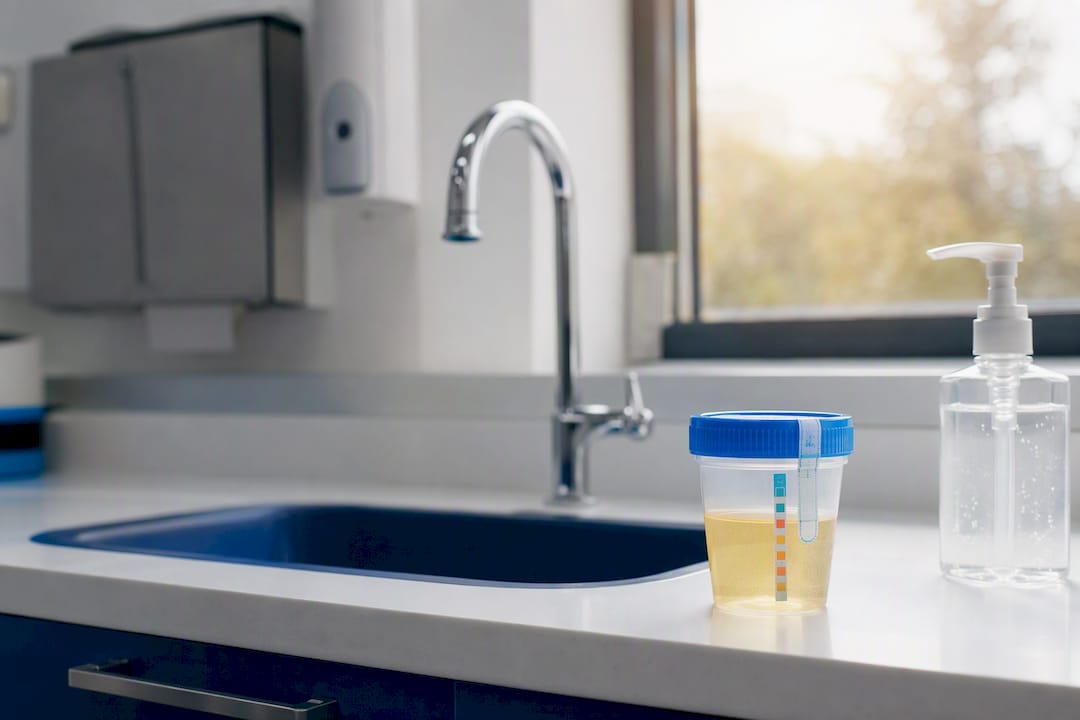
Standard best practice starts with a clean, temperature-checked specimen collected directly into a tamper-evident container. Facilities running chain-of-custody collections typically ask the donor to wash their hands with water only, avoiding any alcohol-based soap or sanitizer right before providing the sample, since residue on the hands can transfer into the cup. Bluing agents are sometimes added to toilet water in collection restrooms specifically to prevent dilution by tap water.
Temperature strips on the collection cup confirm the sample matches body temperature within minutes, catching attempts to substitute a stored or synthetic sample. Collectors seal the specimen in front of the donor, apply tamper-evident tape, and complete a custody-and-control form documenting every hand-off from collection to lab analysis. Any break in that documented chain can undermine the result’s usefulness in a legal or employment dispute, even if the underlying lab work was flawless.
For screening-only contexts, the standards relax somewhat, but the core principle holds: avoid touching alcohol-based products in the hour before providing a sample, use a clean container, and get the sample to testing as quickly as possible. Delays sitting at room temperature can alter results in ways a same-day test avoids entirely.
Why Do Chronic and Occasional Drinkers Interpret Differently?
The same EtG number means different things depending on someone’s drinking history, and that’s one of the more overlooked wrinkles in interpreting results.
An occasional drinker who had two glasses of wine at dinner and gets tested 60 hours later might land right at a moderate cutoff, a fairly clean signal of that one episode. A person with a pattern of heavy or chronic drinking presents a murkier picture. Their body may metabolize alcohol differently after sustained exposure, and residual EtG from drinking several days earlier can overlap with more recent use, making it harder to pin a positive to a single event.
Chronic heavy drinkers also tend to show higher baseline EtG concentrations even after a similar amount of alcohol, partly because sustained drinking affects liver function and glucuronidation efficiency over time. That means a “high positive” doesn’t map cleanly onto “drank more recently” when comparing across different drinking histories.
This is exactly the nuance that gets lost when someone reads a lab report as a simple pass or fail. A number that looks alarming for an occasional drinker might be entirely consistent with an isolated incident, while a similar number for someone in a monitoring program with a documented history of heavy use could suggest a pattern worth a closer clinical look. Treatment programs that understand this distinction tend to weigh trends across multiple tests rather than reacting to any single result in isolation.
Do Hydration and Metabolism Change Your Results?
Hydration status shifts EtG concentration in ways that surprise a lot of people, though it doesn’t erase the metabolite from your system entirely.
Drinking large amounts of water dilutes urine, which can lower the measured EtG concentration below a given cutoff even though the metabolite is still technically present at some level. This is part of why labs check specific gravity and creatinine alongside EtG. An unusually dilute sample raises flags and may prompt a retest rather than a straightforward negative result.
Metabolism plays an equally large role. Liver enzyme activity, genetics, body composition, and even sex-based differences in ethanol processing all affect how fast someone clears EtG. Two people who drank the identical amount at the identical time can produce meaningfully different results 48 hours later purely based on individual metabolic rate. Kidney function matters here too, since EtG leaves the body through renal filtration; anyone with reduced kidney function may show detectable EtG for longer than expected, independent of how much they actually drank.
None of this means hydration or metabolism can reliably beat a test. Diluting a sample enough to hide a real positive usually triggers a specific-gravity flag that draws more scrutiny, not less. The practical takeaway is that identical drinking behavior can produce a range of results across different people, which is one more reason a single test result deserves context rather than a snap judgment.
What’s New in EtG Testing Technology?
Analytical chemistry keeps tightening the precision of EtG detection, and the biggest shifts have happened in confirmation methods rather than screening strips. LC-MS/MS remains the reference standard, with peer-reviewed methods now routinely quantifying EtG and EtS down to limits near 50 to 100 ng/mL, sharp enough to separate meaningful positives from background noise far better than immunoassay screening alone.
Labs have also gotten better at running EtG and EtS side by side as a standard pairing rather than an optional add-on, which directly improves the ability to flag incidental exposure instead of misreading it as drinking. That pairing has become close to routine in serious monitoring programs, transplant clinics, and professional-monitoring settings where a wrong call carries real stakes.
On the consumer side, home test strips have improved in sensitivity and ease of use, though they still can’t match lab confirmation for anything with legal or occupational weight. The bigger shift is in how monitoring programs use the data over time: instead of judging one test in isolation, programs increasingly track trends across repeated tests, giving a clearer picture of a person’s actual pattern rather than a single snapshot.
How Total Tox Handles EtG Testing and Client Guidance
Total Tox runs walk-in EtG urine testing with results typically back within 24 hours, backed by MRO review and audit-ready documentation for anyone who needs a defensible record. We point clients toward lab confirmation whenever results affect employment, legal standing, or a formal monitoring program, and reserve simpler screening for lower-stakes situations. Before your visit, bring a valid ID and any required referral or program paperwork, and ask upfront about chain-of-custody if your situation calls for it. You’ll leave knowing exactly what happens next with your results.
Ready to Schedule Your EtG Test?
If you need a documented result for a job requirement, a monitoring program, or peace of mind before a big decision, Total Tox gets you in and out fast without the guesswork that comes with home strips. Walk-in EtG urine testing means no long wait for an appointment slot, and every result that needs to hold up gets MRO review and audit-ready documentation behind it.
That combination matters most for people who can’t afford an ambiguous result: transplant candidates, employees in safety-sensitive roles, and anyone in a formal monitoring program where a screening strip simply won’t cut it. Chain-of-custody handling is available when your situation requires it, and turnaround typically lands within 24 hours of your visit.
Check the full range of drug and alcohol testing services Total Tox offers, or head straight to scheduling your visit to get a documented EtG result without the wait.
A Straight Answer on What EtG Testing Can and Can’t Tell You
The industry’s dirty secret about EtG testing isn’t that it’s unreliable. It’s that it’s too reliable at the wrong job. EtG was built to detect trace alcohol exposure, and it does that with a sensitivity that makes it excellent for catching relapse in a treatment program and genuinely risky when used as the only evidence in a courtroom or a termination hearing.
We think the industry conversation focuses too much on detection windows and not enough on what a positive actually proves. A 48 hour window sounds precise until you remember that mouthwash, hand sanitizer, and a bottle of cough syrup can all produce the exact same number on a lab report as an actual drink. The fix isn’t better math on the detection window. It’s insisting on confirmation, EtS measurement, and clinical context every time a result carries real consequences.
That’s the standard we hold ourselves to with every EtG test we run, and it’s the standard we’d want applied to our own results if the roles were reversed.
— Total Tox
This article is general information, not a substitute for advice from a qualified doctor. Consult a qualified healthcare professional about your own circumstances before acting on anything here.
Sources
- Ethyl glucuronide (review): detection windows and analytical methods
- ETGC - Overview: Ethyl Glucuronide Confirmation, Random, Urine | Mayo Clinic Laboratories
- Substance Abuse and Mental Health Services Administration (SAMHSA)