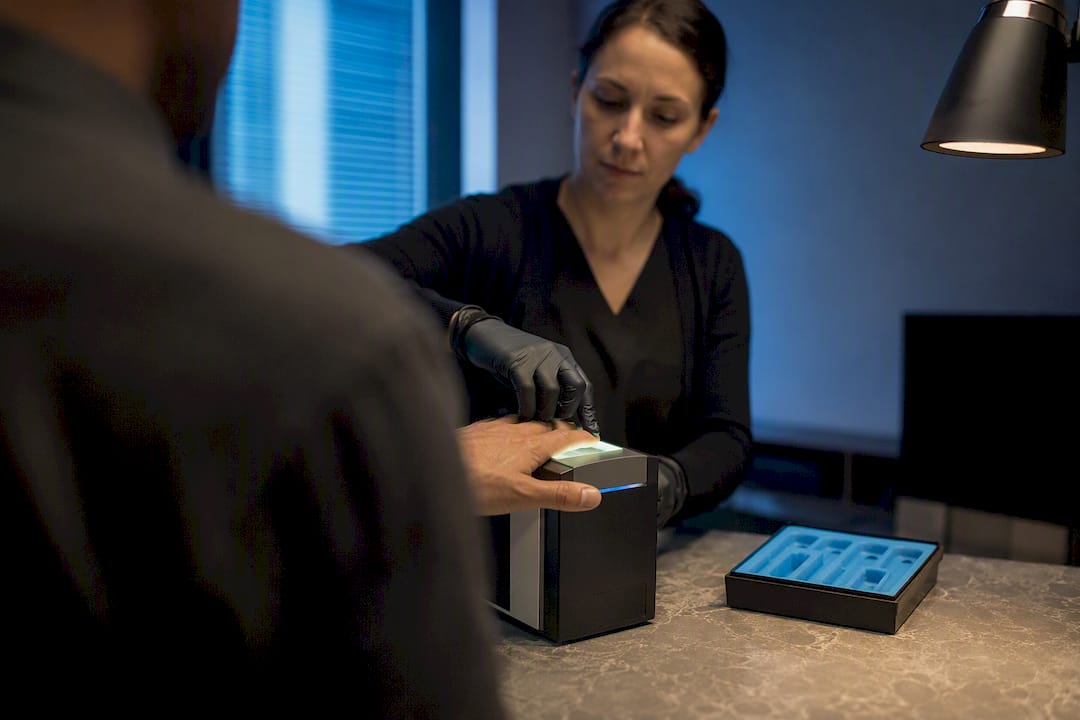
An FBI background check for employment means requesting an Identity History Summary, the FBI’s official record commonly called a rap sheet. The fastest route for tight hiring timelines is an FBI-approved channeler or the FBI’s electronic submission (eDO) service; the FBI charges a processing fee of $18 for this service. Employers using the results must also follow FCRA disclosure and consent rules plus EEOC nondiscrimination guidance before making a hiring decision.
TL;DR:
- Employers must have statutory or official approval to request FBI background checks for certain roles, especially in regulated fields like healthcare and transportation.
- The fastest method for obtaining an FBI Identity History Summary is through an approved channeler, typically returning results within 24 to 72 hours, at a cost of $18 plus service fees.
- Proper legal compliance requires documented consent, clear notices, and a record of all steps taken, as well as reviewing FBI results against state and local records before deciding.
- Fingerprint capture with Live Scan or experienced technicians significantly reduces rejection delays, which are mostly caused by poor-quality prints or mismatched information.
- Employers should pair FBI checks with local background checks and maintain thorough documentation to ensure compliance and minimize legal risks during hiring.
Table of Contents
- Employer Checklist: Legal Steps Before Requesting FBI Checks
- How to Get an FBI Identity History Summary for Employment
- Who Can Receive FBI CHRI, and What Rap Back Changes
- Fingerprint Capture Best Practices to Avoid Rejections
- Interpreting Results and What Happens Next
- Total Tox Perspective: Real-World Capture and Compliance Experience
- How Total Tox Can Help With Fingerprinting and Documentation
- Sources
- FAQ
Employer Checklist: Legal Steps Before Requesting FBI Checks
Before you fingerprint a single applicant, confirm you actually have legal standing to request FBI Criminal History Record Information (CHRI) for that role. Not every employer can pull an FBI-level check for every job. Some positions require statutory authorization or state agency approval, particularly in transportation, healthcare, education, and childcare.
Once you’ve confirmed authorization, the compliance sequence looks like this:
- Get written disclosure to the applicant that a background check will be performed, separate from the job application itself.
- Obtain signed, written consent before ordering any report.
- If the report factors into your decision, provide the applicant a copy along with a summary of their rights under FCRA and EEOC guidance.
- Send a pre-adverse action notice if you’re leaning toward rejection based on the report, and give the candidate a reasonable window to respond or dispute.
- Issue a final adverse action notice only after that window closes, if the decision stands.
The EEOC’s guidance on background checks warns against blanket exclusion policies that disproportionately screen out protected groups without job-related justification. A consistent, documented policy on which roles require an FBI check and what criteria trigger rejection protects you far more than any single vendor or turnaround time ever will.
Keep every consent form, report copy, and decision record on file. If a hiring decision is ever challenged, your paper trail is your defense.
Pro Tip: Write your background check policy down before your first hire, not after your first lawsuit. A one-page document listing which roles require FBI checks and why saves you when someone asks “why him and not her?”
How to Get an FBI Identity History Summary for Employment
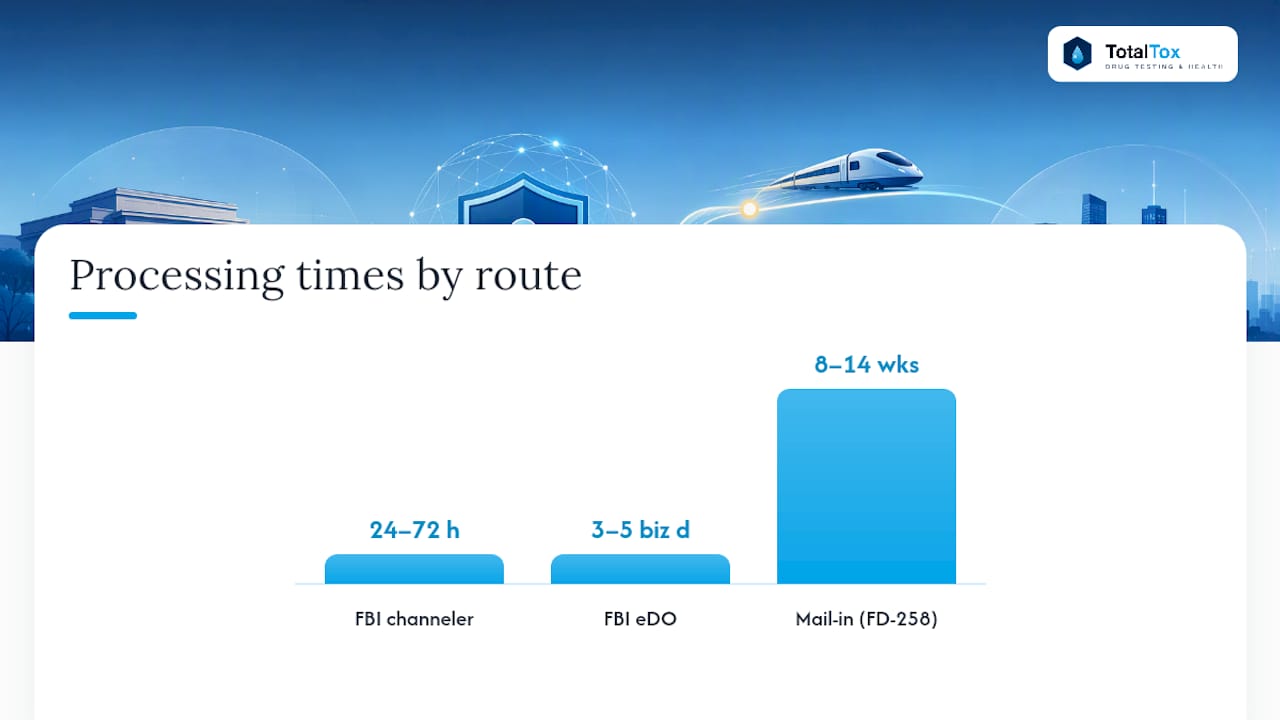
You have three real options, and they are not close to equal in speed.
- FBI-approved channeler (electronic): This is the fastest practical route for most employment deadlines, with results often returned in 24 to 72 hours. You’ll pay the $18 FBI processing fee plus a separate convenience or capture fee set by the channeler, which varies by provider.
- FBI electronic submission (eDO): Submitted directly through the FBI with digital fingerprint capture, this typically runs 3 to 5 business days and costs the same $18 fee.
- Mail-in with FD-258 or FD-1164 cards: Same $18 fee, but expect 8 to 14 weeks or longer once you factor in postal time in both directions. There’s no way to pay extra for faster processing on the mail route.
One thing worth knowing: channelers can’t magically speed up a mailed submission once it’s in the mail system. The speed advantage only exists if you use the channeler or electronic path from the start.
By the numbers: channeler submissions clear in roughly 24 to 72 hours, eDO takes 3 to 5 business days, and mail-in requests stretch to 8 to 14 weeks or more.
If your result needs an apostille or consular authentication for use abroad, build in extra weeks. Many receiving countries and organizations also require the summary to be dated within 3 to 12 months of submission, so timing your request against that validity window matters as much as the fee you pay.
Who Can Receive FBI CHRI, and What Rap Back Changes
Not just anyone can request or receive FBI CHRI for noncriminal purposes. Access is limited to agencies and entities with specific statutory or regulatory authorization, which is why some employers route requests through licensing boards or approved channelers rather than pulling records directly.
- Only authorized agencies or entities with statute backing or FBI approval may receive CHRI for civil, noncriminal purposes.
- The Rap Back Service lets authorized agencies retain an applicant’s civil fingerprints and receive automatic alerts if that person is later arrested or has a disposition recorded, without resubmitting prints.
- Applicants enrolled in Rap Back must receive privacy notices, and the subscribing agency must have documented legal authority to retain the prints long term.
- For employers in licensing-heavy fields like healthcare or education, Rap Back cuts down on repeat fingerprinting but requires upfront legwork to establish that authority correctly.
Fingerprint Capture Best Practices to Avoid Rejections
A rejected fingerprint card is the single most common cause of employment background check delays, and it’s almost always preventable.
- Choose Live Scan or digital capture over ink cards whenever it’s available. It virtually eliminates smudging and quality rejections.
- If ink cards on FD-258 are your only option, use a technician with real fingerprinting experience rather than winging it in an HR office.
- Double-check biographic details before submission. Name, date of birth, and any agency ORI or reason-for-request fields must match exactly.
- Confirm the fee is paid and attached correctly. A missing payment is an easy way to stall the entire request.
- If prints come back smudged or the identifying information doesn’t match, reprint immediately rather than waiting to see if it clears on its own.
Pro Tip: If you’re up against a hard start date, use a channeler for the submission and schedule your fingerprint capture at least a week ahead of when you need results. Mail-in requests are for personal record checks with no deadline pressure, not for new hires starting Monday.
Interpreting Results and What Happens Next
An Identity History Summary only reflects what state and local agencies have actually submitted to the FBI. Reporting gaps are common, so a clean FBI summary doesn’t guarantee a clean county record, which is why many employers pair it with a local or private background check for a fuller picture.
If a record on the report could affect your hiring decision, verify it first: confirm the identity match, check dates and locations against what the candidate disclosed, and give them a chance to explain before you act. Skipping this step is where most disputes and legal exposure come from. If you decide to move forward with rejection, send the pre-adverse notice with the report copy, wait out the response period, then issue the final adverse notice if nothing changes your mind. Applicants who believe their FBI summary contains an error can request a correction directly through the FBI’s challenge process, though resolution can take several weeks depending on the agency that originally submitted the disputed record.

Total Tox Perspective: Real-World Capture and Compliance Experience
Most of the delay in FBI background checks for employment doesn’t happen at the FBI. It happens between the applicant, the HR office, and whoever is supposed to be taking fingerprints that week. Coordinating Live Scan capture directly with a channeler removes several of those handoffs in one move, which is where a walk-in clinic setup can provide an advantage over a mail-in card that sits on someone’s desk.
Audit-ready documentation matters just as much as speed. When an employer can hand an auditor a clean file, verified consent form, reviewed results, and clear timestamps, disputes over compliance tend to end before they start.
— Total Tox
How Total Tox Can Help With Fingerprinting and Documentation
There are walk-in options available as alternatives to mailing fingerprint cards and waiting weeks to find out if they got rejected. Some providers handle fingerprinting and background check capture directly, whether that’s Live Scan or FD-258 cards, with same-day appointments and no long booking process to fight through first.
Because we work regularly with employers under DOT, healthcare, construction, and staffing compliance deadlines, our fingerprinting and background check services are built around getting applicants processed correctly the first time, not chasing rejected prints a week later. We also provide the MRO-reviewed, audit-ready documentation employers need to keep their compliance files clean.
One honest reminder before you show up: confirm your employer’s specific ORI or agency requirements before your appointment. Different licensing boards and channelers request slightly different fields, and getting that right before capture saves a resubmission. Visit our services page to see what to bring and schedule a walk-in.
Sources
This guide draws on FBI Identity History Summary guidance, the FBI’s Rap Back Service documentation, and EEOC background check guidance for employers. Healthcare employers managing related recordkeeping obligations may also find this HIPAA compliance checklist useful for audit-readiness practices.
This article is general information, not a substitute for advice from a qualified lawyer. Consult a qualified legal professional about your own circumstances before acting on anything here.
- Federal Bureau of Investigation
- EEOC — Background checks: What employers need to know
- FBI Privacy Impact Assessment — NGI Rap Back Service
FAQ
How Much Does an FBI Background Check Cost?
The FBI charges a flat $18 processing fee for an Identity History Summary. If you submit through a channeler or use Live Scan capture, expect an additional convenience or capture fee that varies by provider.
Can an Employer Request an FBI Background Check Directly?
Only authorized agencies and entities with statutory authority or FBI approval can receive CHRI for employment purposes. Most private employers work through an FBI-approved channeler rather than requesting records directly.
What Happens if an FBI Report Shows a Record?
Employers must verify the record matches the applicant, then follow the FCRA process: send a pre-adverse notice with a copy of the report, allow time for the applicant to respond, and issue a final adverse notice only if the decision stands. Skipping this sequence creates real legal exposure under EEOC guidance.
Does Total Tox Provide Fingerprinting for Employment Background Checks?
Yes, Total Tox offers walk-in fingerprinting and background check services, including Live Scan and FD-258 capture, with rapid turnaround and audit-ready documentation. Current pricing and scheduling details are available on the Total Tox services page.