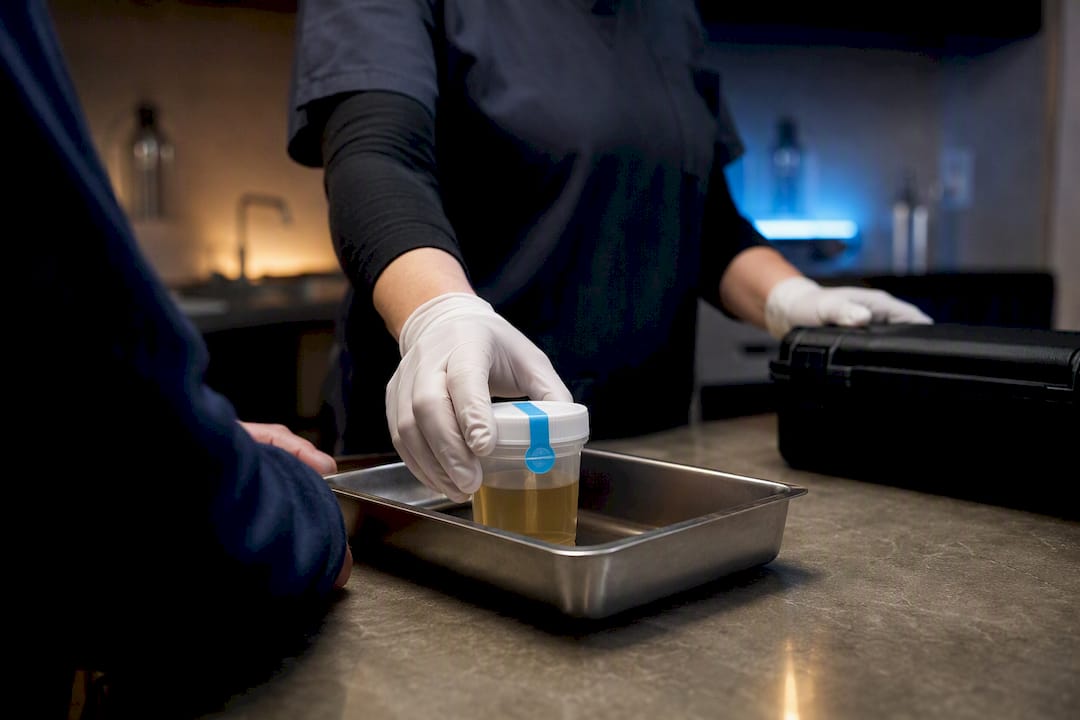
The U.S. Coast Guard accepts three ways to satisfy its drug testing rule for credential applications: a passing DOT 5-panel urine test from a SAMHSA-certified lab reviewed by a certified Medical Review Officer, a letter confirming participation in a compliant random testing program, or a pre-employment testing letter. Results generally must fall within a 185-day window before you apply. Verify your lab and MRO status before you test, not after the National Maritime Center flags your file.
TL;DR:
- A USCG credential applicant must submit a DOT 5-panel urine test from a SAMHSA-certified lab reviewed by a certified MRO within 185 days of application or qualify through a clean pre-employment or random program letter within 60 days.
- Only the DOT 5-panel test, lab with SAMHSA certification, and MRO review qualify; results without signatures or with “negative dilute” results may cause delays or rejections.
- Employers conducting random drug testing must cover at least 50% of crewmembers annually with unannounced tests, documented in line with CFR Part 40 standards, and provide a Letter of Regulatory Compliance if necessary.
- A positive or refused test triggers reporting to the Coast Guard, mandatory SAP evaluation, and follow-up testing, with credential reinstatement depending on completing prescribed treatment or education.
- Accurate scheduling and paperwork, including clear collection dates and verified results within the 185-day window, are essential to prevent delays in the credentialing process.
Table of Contents
- What USCG Drug Testing Requirements Look Like at a Glance
- Who Has to Test, and Which Test Applies
- The 5-Panel, the Lab, the MRO, and the 185-Day Clock
- How to Submit Your Test Results to the NMC
- What Employers Owe Under 46 CFR Part 16 and 49 CFR Part 40
- What Happens After a Positive Test or a Refusal
- Getting Tested Without Delaying Your Credential
- What We See That Most Guides Miss
- Schedule Testing That Won’t Bounce Back From NMC
- Where to Verify These Rules Yourself
- Sources
- FAQ
What USCG Drug Testing Requirements Look Like at a Glance
Before you walk into a clinic, know what the National Maritime Center (NMC) will actually check on your paperwork.
- Test type: DOT 5-panel urine screen only; other panels get rejected outright.
- Lab standard: The lab must carry SAMHSA/DHHS certification.
- Sign-off: A certified MRO must review and sign the result. An unsigned report is an automatic hold.
- Timing: Results must generally sit within 185 days of your application date, with a 6-month/60-day exception path for certain random-program letters.
- Evidence routes: A single passing lab result, a random-testing-program letter, or a pre-employment testing letter, each with its own required wording and signatory.
- Accepted paperwork: NMC works from lab reports, chain-of-custody forms, and employer or consortium letters. Watch for the two most common rejections: a “negative dilute” result treated as a fail-equivalent, and a missing MRO signature.
Get any one of these wrong and your credential application stalls, sometimes for weeks while you track down a corrected letter.
Who Has to Test, and Which Test Applies
Not every credential transaction triggers USCG drug testing requirements, and mixing up the categories wastes time.
- Original issuance of a merchant mariner credential requires drug testing evidence.
- Renewals generally require evidence too, unless you’re covered by an employer’s active random program.
- Raise of grade and first-time endorsements trigger testing in most cases.
- Reissuance after a lapse typically requires fresh evidence.
- Exemptions include increases of scope on an existing credential, duplicate credentials, and most STCW-only endorsement actions, which usually don’t require a new test.
Beyond credentialing, employers run five distinct testing types: pre-employment (before a new hire steps aboard), periodic (tied to license renewal cycles), random (unannounced, spread through the year), reasonable cause (triggered by specific observed behavior, ideally documented by two supervisory observers), and post-accident testing following a serious marine incident. Pilots face a separate annual physical testing requirement that runs on its own schedule rather than the credential cycle.
The 5-Panel, the Lab, the MRO, and the 185-Day Clock
The USCG requires a DOT 5-panel test that screens for marijuana, cocaine, opiates, phencyclidine, and amphetamines. No other panel configuration satisfies a credential transaction, even if it screens for more substances.
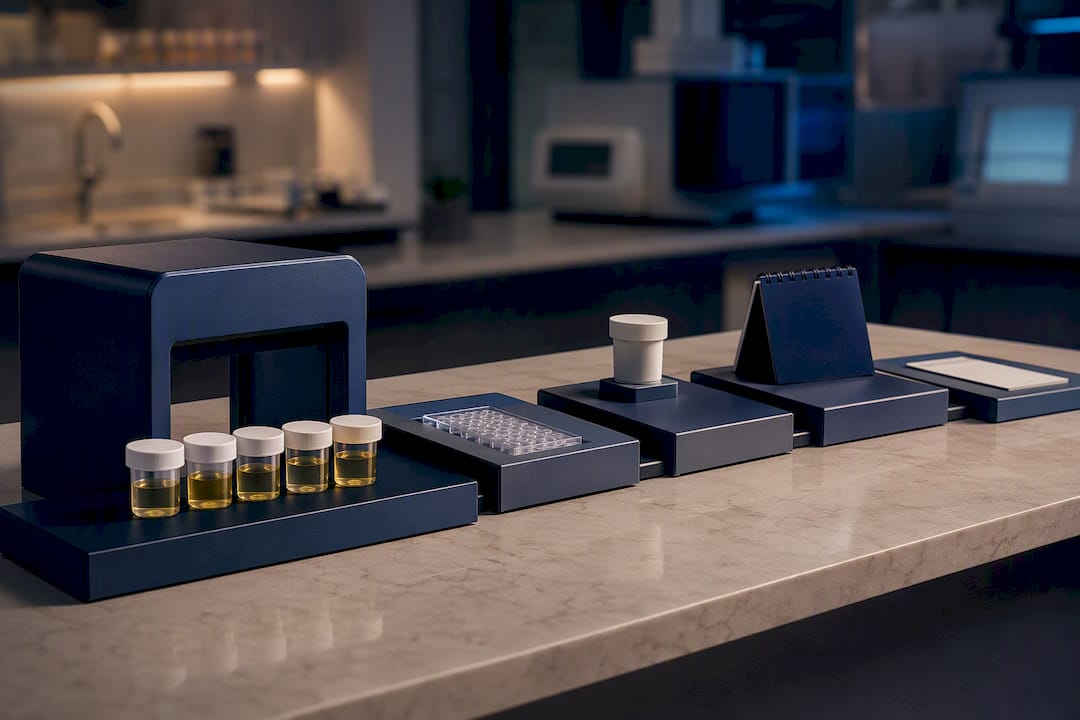
The sample has to run through a SAMHSA-certified laboratory, and a certified MRO has to review the result before it counts as evidence. A lab report without that MRO sign-off is incomplete, no matter how clean the result looks.
Pro Tip: If you hold a state medical marijuana card, it does not change anything for USCG or DOT testing. DOT guidance is explicit that state-authorized medical marijuana use is not an acceptable defense for a positive result under federal transportation rules.
- Results dated within 185 days of your application satisfy the standard route.
- A 6-month/60-day exception applies to certain random-program letters: the letter must confirm you were enrolled in a compliant program covering at least 60 days within the prior 185.
- A pre-employment letter dated within six months, with no positive results since, can also satisfy the requirement.
How to Submit Your Test Results to the NMC
The NMC works from a short list of accepted documents: the lab’s MRO-reviewed result report, the federal chain-of-custody form, or an original letter from your employer or testing consortium. CG-719 forms help but aren’t strictly required for the drug testing portion of most transactions.
Submit through the REC’s document upload process for your application, or mail hard copies if the office you’re working with prefers paper. Either way, check that the MRO signature line is filled in before you send anything. Mistakes that cause the most delays:
- A “negative dilute” result submitted as if it were a clean pass. It often needs a retest.
- Missing dates on the collection or the MRO review, which makes the 185-day window impossible to verify.
- Employer letters missing a Social Security number or employee ID match, which stalls verification against payroll records.
What Employers Owe Under 46 CFR Part 16 and 49 CFR Part 40
Employers running a random testing program must test at least 50% of covered crewmembers annually, selected through a scientifically valid method, typically a random number generator matched against Social Security numbers or payroll IDs.
Tests have to be unannounced and spread across the calendar year, not clustered into one quarter. Consortiums calculate the pool differently than single employers do, so a small operator joining a consortium changes how the math works out.
- Recordkeeping must meet 49 CFR § 40.333 standards, and programs must run in line with 49 CFR Part 40 across the board.
- Employers report data on request and maintain an Employee Assistance Program (EAP) referral path for anyone who tests positive.
- A Letter of Regulatory Compliance (LORC) from the Coast Guard gives auditors and larger operators added assurance that a consortium’s program meets the regulatory intent.
Pro Tip: High-volume operators running multi-vessel fleets benefit most from pursuing a LORC. It cuts down on repeated audit questions from charterers and insurers.
What Happens After a Positive Test or a Refusal
A positive result or a refusal to test triggers mandatory reporting from the employer to the Officer in Charge, Marine Inspection (OCMI), which can lead to suspension or revocation proceedings under Coast Guard credentialing rules.
From there, the MRO verifies the result, and if it’s confirmed positive, a Substance Abuse Professional (SAP) evaluation follows. The SAP determines required treatment or education, and return-to-duty testing then follows a minimum follow-up schedule set by the SAP, not by the mariner or employer.
- Employers must document the entire sequence: report, MRO verification, SAP referral, and follow-up test results.
- Re-employment or credential reinstatement generally hinges on completing the SAP’s prescribed program and passing a return-to-duty test.
- A refusal to test is treated the same as a positive result under most employer programs, with the same reporting obligations.
Getting Tested Without Delaying Your Credential
Walking into the right kind of clinic on the first try saves weeks later.
- Confirm the lab carries SAMHSA certification and that results will be MRO-reviewed before you show up.
- Bring photo ID, your Social Security number, and either your employer’s testing letter or the forms your REC specified.
- Ask the technician to walk you through chain-of-custody steps at collection, so nothing about the sample’s handling is in question later.
- Request written confirmation showing the lab’s name, the MRO’s signature, and the exact test date, then check that date against the 185-day window yourself.
- If you’re covered through a consortium, get a letter that specifically states 60 or more days of participation within the prior 185 days.
Pro Tip: Keep a copy of every test document you receive, even ones you think are just for your employer’s file. If NMC ever questions your submission, you want your own paper trail ready.
What We See That Most Guides Miss
Most credential delays we run into have nothing to do with drug use and everything to do with paperwork. A negative dilute result with no retest, an MRO field left blank, a date that falls one day outside 185. Total Tox built its walk-in process around catching those errors at collection, not after the NMC bounces the file back.
— Total Tox
Schedule Testing That Won’t Bounce Back From NMC
Most delays we see at the counter trace back to one thing: paperwork that looks complete but is missing the piece NMC actually checks. DOT 5-panel collections with MRO-reviewed results and audit-ready documentation can help ensure compliance from the start.
Appointment durations and result turnaround times may vary; please check with your chosen provider for details. When you schedule your test, ask for the MRO-signed report and the exact collection date in writing before you leave. If you’re an employer setting up a random program or need a consortium letter drafted correctly the first time, reach out to our team to get the paperwork right before your next audit or renewal cycle.
Where to Verify These Rules Yourself
Regulations change, and the safest move is always to check the primary source before you submit anything to NMC.
- NMC drug testing guidance, the Coast Guard’s own procedural page for credential applicants.
- 46 CFR Part 16, the chemical testing regulation text.
- 49 CFR Part 40, DOT’s workplace testing procedures, including the medical marijuana guidance.
- SAMHSA’s certified lab list, to confirm your lab before you test.
This article is general information, not a substitute for advice from a qualified doctor. Consult a qualified healthcare professional about your own circumstances before acting on anything here.
Sources
- Drug Testing - National Maritime Center (U.S. Coast Guard)
- 46 CFR Part 16 — Chemical Testing
- SAMHSA list of certified laboratories
FAQ
What drug test does the USCG require for a captain’s license?
The USCG requires a DOT 5-panel urine test screening for marijuana, cocaine, opiates, PCP, and amphetamines, processed at a SAMHSA-certified lab and reviewed by a certified MRO.
What are the requirements for a USCG drug test and physical?
Drug testing and the physical exam are separate requirements: testing needs a passing DOT 5-panel result, random-program letter, or pre-employment letter, while the physical follows its own medical certification standard tracked through the NMC.
How long is a drug test result valid for a USCG credential application?
Results generally must fall within a 185-day window before your application date, with a separate 6-month/60-day path available through qualifying random-program letters.
Does a state medical marijuana card exempt me from a positive test?
No. DOT guidance states that state-authorized medical marijuana use is not an acceptable medical explanation for a positive federal transportation drug test.
What happens if I refuse a USCG-required drug test?
A refusal is treated the same as a positive result, triggering employer reporting to the OCMI and the same MRO/SAP return-to-duty process that follows a confirmed positive.
Can Total Tox handle DOT 5-panel testing for a USCG credential?
Yes. Total Tox provides DOT 5-panel testing with MRO-reviewed results and audit-ready documentation designed to meet NMC submission standards on the first try.